As Vincent stood by the lake at Shenzhen Talent Park, watching drones trace intricate patterns across the night sky—dragons, phoenixes, and the famous phrase “Once you arrive, you’re a Shenzhener”—he suddenly understood that the city’s allure went far beyond technology itself. It was like a sophisticated translator, rendering the word “future” into a way of life that anyone could grasp.
"Six months ago, when Vincent — whose Chinese name is 潘龙日 — first set foot on the soil of Shenzhen, his state of mind was far less composed than it is now. At that time, he had just received his admission notice from Peking University HSBC Business School. Flying in from Ho Chi Minh City, the moment he landed at Bao'an Airport, his heart was both excited and nervous: he knew he could not speak much Chinese yet, but precisely because of that, he had already started teaching himself basic vocabulary, had loaded translation apps on his phone, and was quietly cheering himself on — 'Start with "hello" and "thank you," take it slow.'"

Vincent
“Everybody’s Dream” and That Leap
Vincent spent his early years in Quang Tri before moving with his family to Ho Chi Minh City. As an undergraduate, he studied management and minored in marketing. During those years, he became more interested in China, both as a place to study and as a country with growing relevance to Vietnam’s future.For him, Peking University was not only a famous name. It represented a serious academic opportunity and a chance to understand China more directly. “I knew PKU had strong academic standing,” he says. “But what mattered to me even more was the chance to study in an environment that would push me to grow.”
The moment he received the news of his admission to Peking University Shenzhen Graduate School, he was at work at his company in Vietnam. As the message popped up on the screen, Vincent—usually so rational—broke character completely and sprang up from his chair with excitement; the chair wheels slid half a meter before hitting the partition with a dull thud. Before this, he had only told his direct supervisor about his application for a master’s program at Peking University, but unexpectedly, the joyous news spread like wildfire. Soon, the CEO walked over and congratulated him with a smile. Colleagues gathered around, offering their congratulations in a flurry of voices.Surrounded by the group, with cheers rising and falling in his ears, he felt not only the joy of personal achievement but also a deep sense of warmth and recognition from the collective.
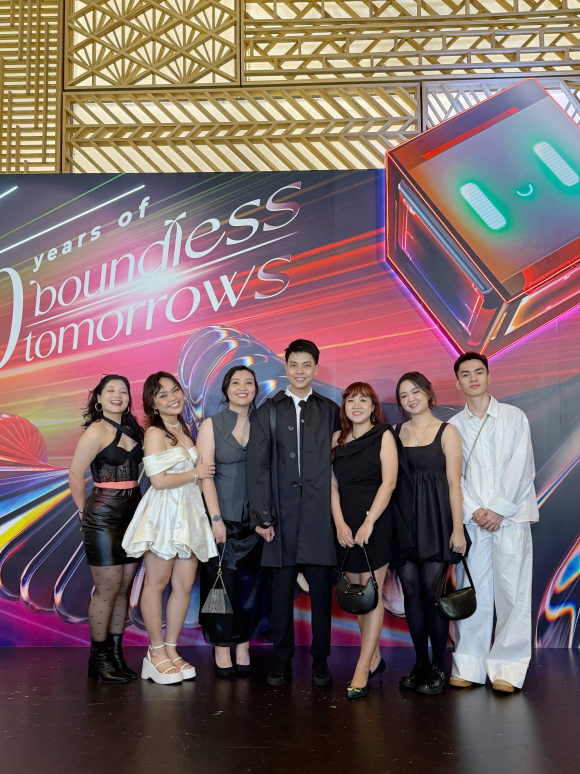
Vincent(R)and his previous colleagues
Yet it was only when he actually set foot in Shenzhen that the real challenge began. The massive signs at the airport, the fast-moving crowds, the unfamiliar language all around him… He clutched his suitcase, his heart racing. “This is even my first time coming to China—am I really ready?”
As he thought to himself, he began to studied the Shenzhen rail transit map and took Line 7 to Peking University, following the stops.But all the anxiety and worry vanished the moment he stepped through the school gate.From registration to moving into his dorm, every staff member patiently helped him through each step. “It’s hard to describe,” he recalls. “It felt like they were saying, ‘It’s okay—now that you’re here, everything will be fine.’” Compared to the anxious young man he’d been upon arrival, the Vincent of today is calm and composed, making one all the more curious about what he’s experienced over these six months at PKU.
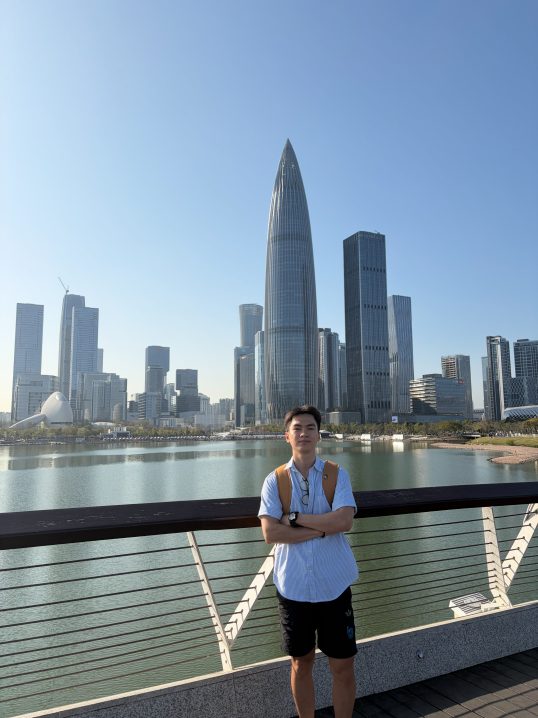
Vincent at Shenzhen Talent Park
“Hello”: A Universal Key
Vincent didn’t start learning Chinese particularly early. In fact, it was only after coming to China that he began to study it in earnest. “I regret not starting sooner,” he admits. But the speed of his progress has surprised even him. “Chatting with Chinese classmates and teachers, I learn something new every day. I feel like I’m improving so fast.”
For many international students, there is always one phrase that feels uniquely their own—whether it’s the first sentence they ever managed to say fluently, or the expression they use most often. When asked about this, Vincent smiles mysteriously and reveals his own “secret.”
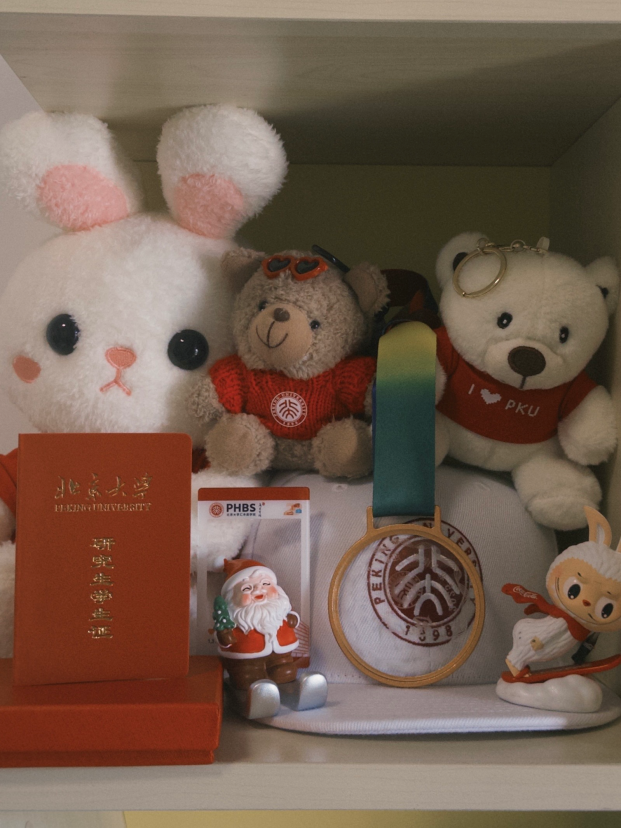
Vincent’s PKU collections
His secret is the simplest of words: “nǐ hǎo”—“hello.” He calls it his “universal key.” “No matter who you’re talking to, as soon as you say ‘hello,’ you get a friendly response.” With this one phrase, Vincent has opened the door to friendship with many Chinese people. Since coming to Shenzhen, he has moved from limited Chinese toward basic daily communication. He still does not describe himself as fluent, but he is now able to handle everyday situations on his own.“There’s still a lot of room for improvement, but at my current level, at least ordering food, hailing a taxi, and asking for directions are no problem.”
And what truly helped him settle into the city was a badminton racket.
Badminton, Social Media, and a “Multiverse”
Vincent’s badminton journey began as a child, playing in the yard with his parents. Began with a solid foundation built since childhood,upon arriving in Shenzhen, he quickly joined PKU’s badminton team. “I’m the only international student on the team,” he says. “My teammates were a bit shy at first, but they really made an effort to include me and connect with me.”
Badminton became more than a way to unwind after class. It gave him a routine, a group, and a setting in which friendships formed naturally.Once, he and some of his badminton buddies took a trip to Zhuhai, spending two full days at Chimelong Ocean Kingdom. “That was a great experience—it wasn’t just about playing badminton; we traveled together, lived together.” Next week, he’ll be competing in another tournament. As he talks about it, there’s a lighthearted satisfaction in his voice. “China is such a great place for badminton lovers.”
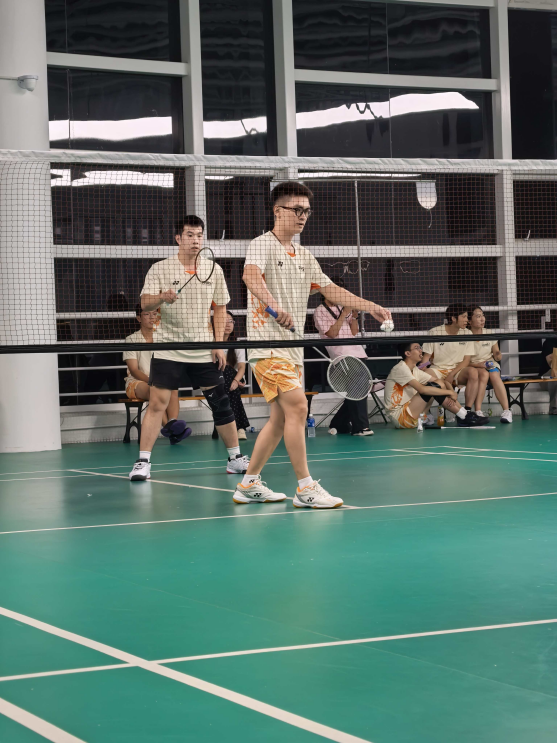
Vincent in badminton competition
In addition to playing badminton, Vincent runs his own social media accounts, where he shares his life in Shenzhen and at PKU. “There’s very little information about the Shenzhen campus overseas,” he explains. “I wanted to be a source of information, to help more Vietnamese people understand what life is like here.” Outside the court, Vincent also documents his student life online. Through TikTok and other platforms, he shares daily experiences at PHBS and practical information for students in Vietnam who want to learn more about PKU, the application process, and the realities of studying in Shenzhen. “When I was preparing my own application, I had to search for a lot of this information by myself,” he says. “So I wanted to make the process clearer for others.By building this digital bridge between the two countries, Vincent has slowly grown a following, reinforcing his determination to contribute to cross-cultural exchange.
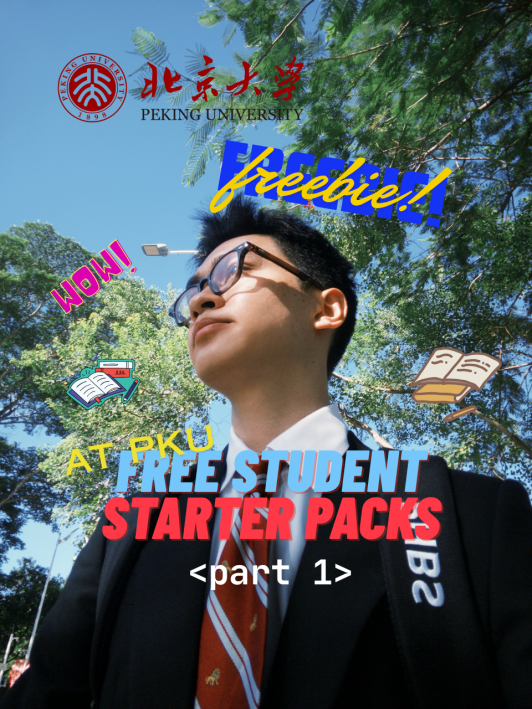
Vincent’s TikTok video
Once, a professor asked him in class, “What do you think about Vietnam’s current development?” He thought for a moment and replied, “Today’s Vietnam is embracing all forms of cooperation and challenges with a more open attitude,And the government has built a solid "runway" for the economy to take off through deep connections with international resources. Much like China’s advanced model of open development, and especially with the APEC summit to be held in Shenzhen this year, many Vietnamese people are very much looking forward to it.”In class, questions like these made him think more deeply about how countries grow, connect, and learn from one another. For him, studying in Shenzhen is not only about business education. It is also about seeing how ideas move across borders.
As for Shenzhen itself, Vincent sums it up in three words: innovation, limitless opportunity, and efficiency. In his mind, Futian District is a “multiverse”—a place where high-tech skyscrapers coexist with quiet cafés and bookshops. “Futian is my favorite,” he says. “It’s a microcosm of Shenzhen—it has everything.” To him, Futian is like a magic box full of endless possibilities.
Drone Shows and “Another Level”
Vincent’s most visceral encounter with Shenzhen’s technological edge came the first time he watched a drone show at Talent Park. Standing with a group of other international students, he gazed up as hundreds of drones shifted into elaborate formations. “Back to many countires, drone performances are still very simple—just a few letters,” he says. “But in Shenzhen, I’ve seen how innovative and large-scale they can be—the shows here are truly on another level, more complex, more beautiful, and every one is different.”
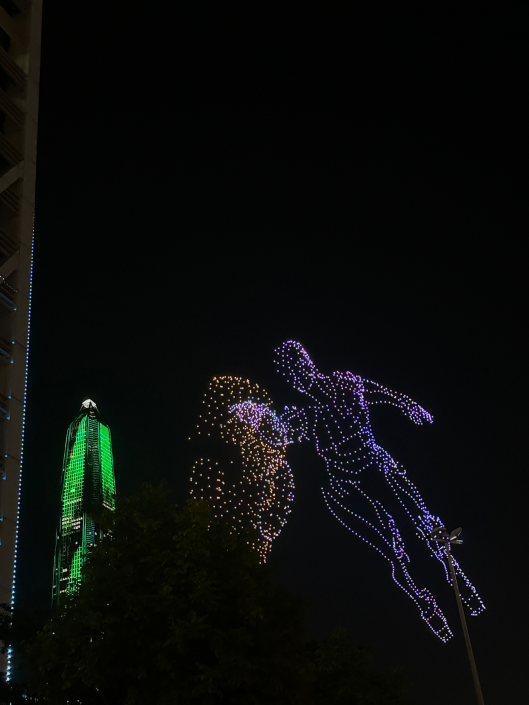
Drone show shot by Vincent
This sense of technological immersion is woven into daily life. What struck him most was the smoothness of daily life in Shenzhen. Payment, transport, food delivery, shopping, and reviews all felt tightly linked inside a single digital routine.“Here, everything is already digital.” His phone is packed with apps: Doubao, Dianping, Qianwen, JD.com, Pinduoduo, Xiaohongshu, Xingt, Meituan… “Meituan sells everything,” he marvels. “You just can’t imagine that in other countries.”
But what truly moves him is the way this fast-moving city makes room for nature. “The Shenzhen government really values balance,” he says. “It’s not just about building skyscrapers—they make sure technology, daily life, and nature all have their place.” He’s watched drone shows at Talent Park and, along the same coastline, spotted migratory birds resting. “In those moments, you realize that a ‘city of the future’ isn’t just about glass curtain walls and algorithms—it can also be very inclusive.” As a resident of this “future city,” Vincent deeply appreciates this human-centered balance.
Classroom “Friction” and “Win-Win Cooperation”
At PHBS, Vincent found that the classes that stayed with him most were not always the easiest ones. In Weiming YE’s research project, what struck him was not only the subject of AI and the labor market, but the way the discussion stayed tied to real social consequences. “she pushed us to think beyond efficiency,” Vincent says. “We had to ask who benefits, who is left behind, and what kind of changes technology brings to ordinary people.” In Professor Joo Young Park’s marketing class, she was equally drawn to the discipline of discussion. “she took student feedback seriously, but he also pushed us to defend our reasoning. I felt that classroom participation was not about speaking more, but about thinking more clearly.”
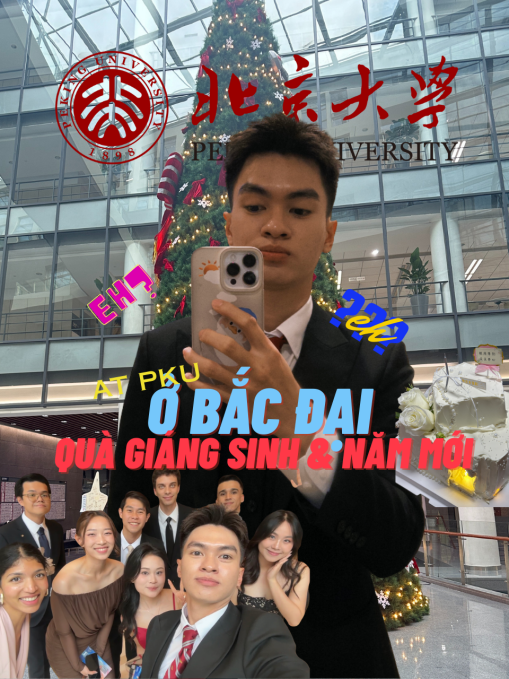
Vincent with his friends
His most revealing experience came in an entrepreneurship project. Vincent’s group, two Chinese students and two international students, had to interview a local CEO and cut two hours of footage into a ten-minute film. The main challenge was not language. It was deciding what mattered most. Some team members wanted a clear story centered on the company’s success and strategy. Others wanted to keep moments that showed the CEO’s personality and decision-making. “We were not arguing over facts,” Vincent says. “We were arguing over emphasis.”
For Vincent, that was the real lesson. Ideal Cross-cultural teamwork is often described in soft language, but in practice it involves different instincts about clarity, persuasion, and what makes a story credible. Because he could partly follow both sides, he often found himself translating not only language, but intention. After several rounds of discussion, the group arrived at a version that everyone accepted. More importantly, he came away with a sharper understanding of collaboration. Agreement does not come from avoiding differences. It comes from making those differences discussable.
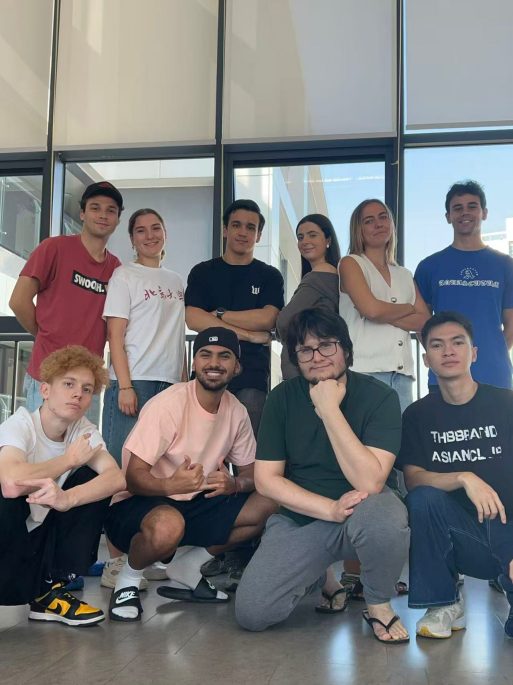
Vincent and friends from different countries
“Win-win cooperation”—a phrase often heard in China—has taken on concrete meaning for Vincent. Before coming to Shenzhen, Vincent often thought of cooperation between countries in broad economic terms, trade, investment, market access. Now he sees another layer. Long-term cooperation also depends on smaller acts of interpretation: how people explain priorities, negotiate meaning, and build trust across different assumptions. For him, that shift in perspective has been one of the most valuable parts of studying in China.
APEC, Black Tea, and “Going with the Flow”
As a young citizen of an APEC member country, Vincent is full of anticipation for this year’s APEC conference in Shenzhen. “I want to see how Shenzhen’s innovations are introduced to the world,” he says. “And I hope other countries’ policies can draw inspiration from them. Shenzhen is such a good example of modernization.”What draws him is not only the visibility of Shenzhen as the host city, but the larger questions APEC brings into focus. How do economies stay open while adapting to change? How does innovation move from policy into daily life? How does regional cooperation create real opportunities for businesses, students, and cities? For him, these questions feel immediate in Shenzhen, where China has framed APEC 2026 around openness, innovation, and cooperation.
In his view, the role of young internationals on platforms like APEC is to serve as a “bridge,” transmitting information between nations. “I can be a voice,” he says, “communicating my background and explaining my perspective.” As a student from Vietnam living in China, he wants to understand how people in the region think, work, and build partnerships. “Real exchange starts with curiosity,” he says. “You ask good questions, you listen carefully, and you learn how ideas are translated across different contexts.” In his view, the value of APEC is not only in high-level meetings, but in the habits of cooperation behind them.
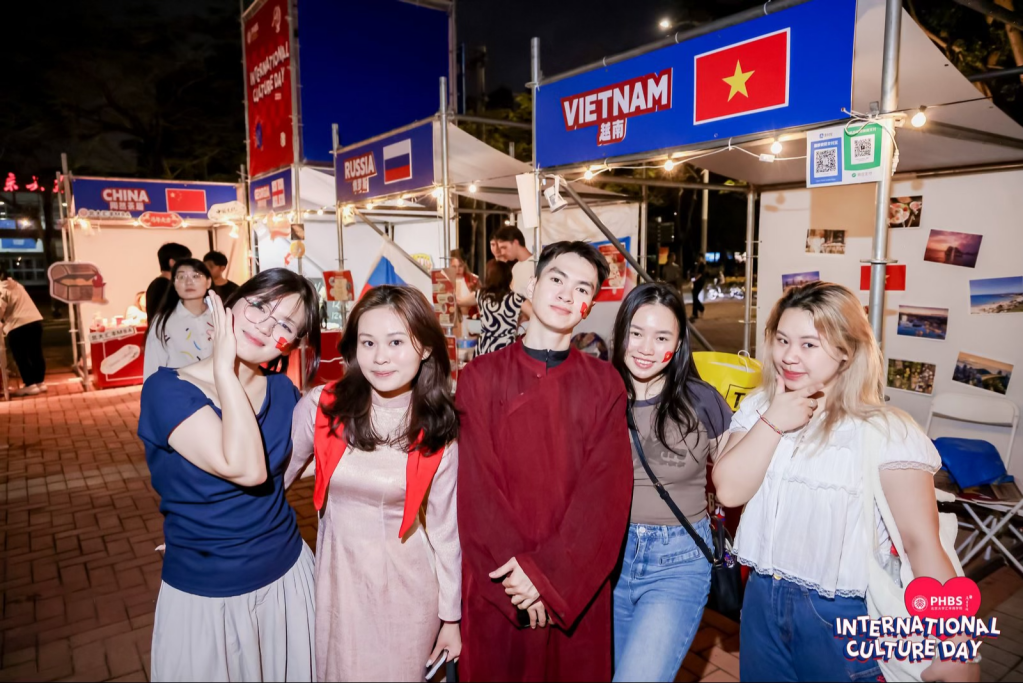
Vincent and Vietnam Booth on International Culture Day
When the conversation turns to the future, Vincent’s tone becomes both gentle and resolute. Looking ahead, he hopes to work in cross-border business between Vietnam and China. His studies at PHBS have given him formal training in business, but life in Shenzhen has also shown him something less formal and equally important: economic cooperation depends on trust, local knowledge, and cultural understanding. Policy sets direction, but people carry it forward.
“Tea culture, food culture, work culture,” he counts off. “There’s so much the two countries can learn from each other.” He mentions black tea, noting that both Vietnam and China have tea traditions, but with different methods and customs—each reflecting a distinct philosophy of life. “These little details are fascinating. They make me feel that we’re actually very close.”
As for where he’ll be in ten years, Vincent doesn’t have a concrete answer. He only says he hopes to keep sharing information and encouraging more Vietnamese students to learn about China and Peking University. “I spent a whole year researching this myself,” he says. “I hope those who come after me won’t have to go through as many detours.”
He adds one final thought: “Keep trying, never give up. Don’t have regrets.”
The words feel like they’re meant for himself, and for anyone standing at a crossroads of choice.
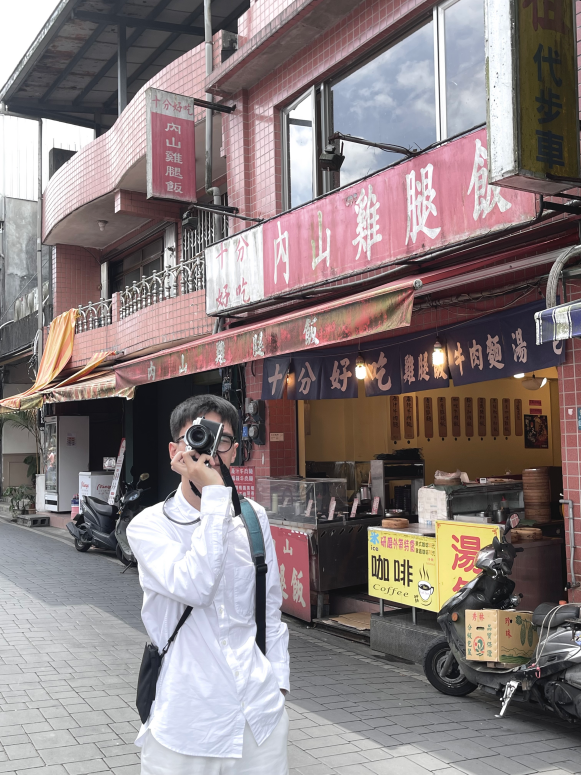
Life through Vincent's lens
From Quang Tri to Ho Chi Minh City, from Ho Chi Minh City to Shenzhen, Vincent has spent six months finding his own rhythm in a city known for “innovation” and “efficiency.” He plays badminton, shoots short videos, shares his views in class, tries stir-fried rice noodles at local eateries—slowly, unhurriedly, he has turned himself into a bridge. At one end of the bridge is home; at the other, the future. And the bridge itself is still growing.