Stepping into Nanyan Garden, we listen to how Doris and Jia Hui from Malaysia found the intersection of scientific research and their ideals in the world of new materials.
At the School of Advanced Materials, Peking University Shenzhen Graduate School, we met Doris and Jia Hui, who traveled thousands of miles from Malaysia. Here, they seek the meeting point of research and their aspirations, and begin their own Nanyan story.
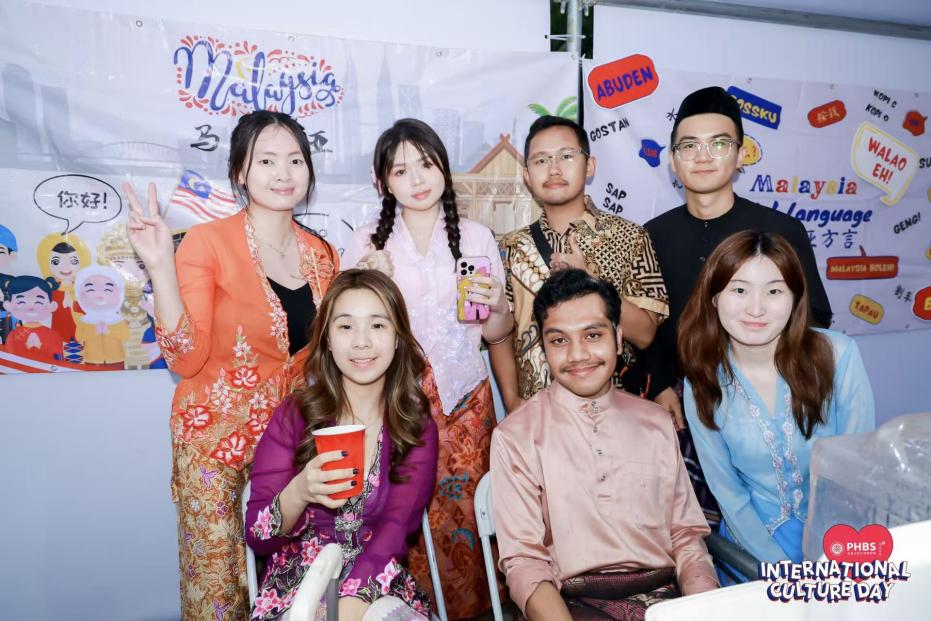
Doris (back row, second from left) and Jia Hui (back row, far right) at the International Cultural Festival
I. First Light: Academic Pursuits Across the Seas
1. From "Doctor Dream" to R&D Path: Choosing to Protect More People
In high school, Doris was determined to become a doctor. In her eyes, putting on a white coat and standing at the operating table to treat patients was the most direct and warmest way to save lives. *"Back then, I thought curing patients with my own hands must be the most fulfilling thing in the world."* Recalling her original aspiration, her eyes still sparkle.
But as she grew older, she began to reflect: a doctor can only treat one patient at a time. But what if she could develop a new type of medical device — could that help thousands of people at the source?
This idea shifted her life's trajectory. She changed her undergraduate major to biomedical engineering, committing herself to the research and development of medicines and medical devices. With that dream, she made her way to Nanyan Garden.
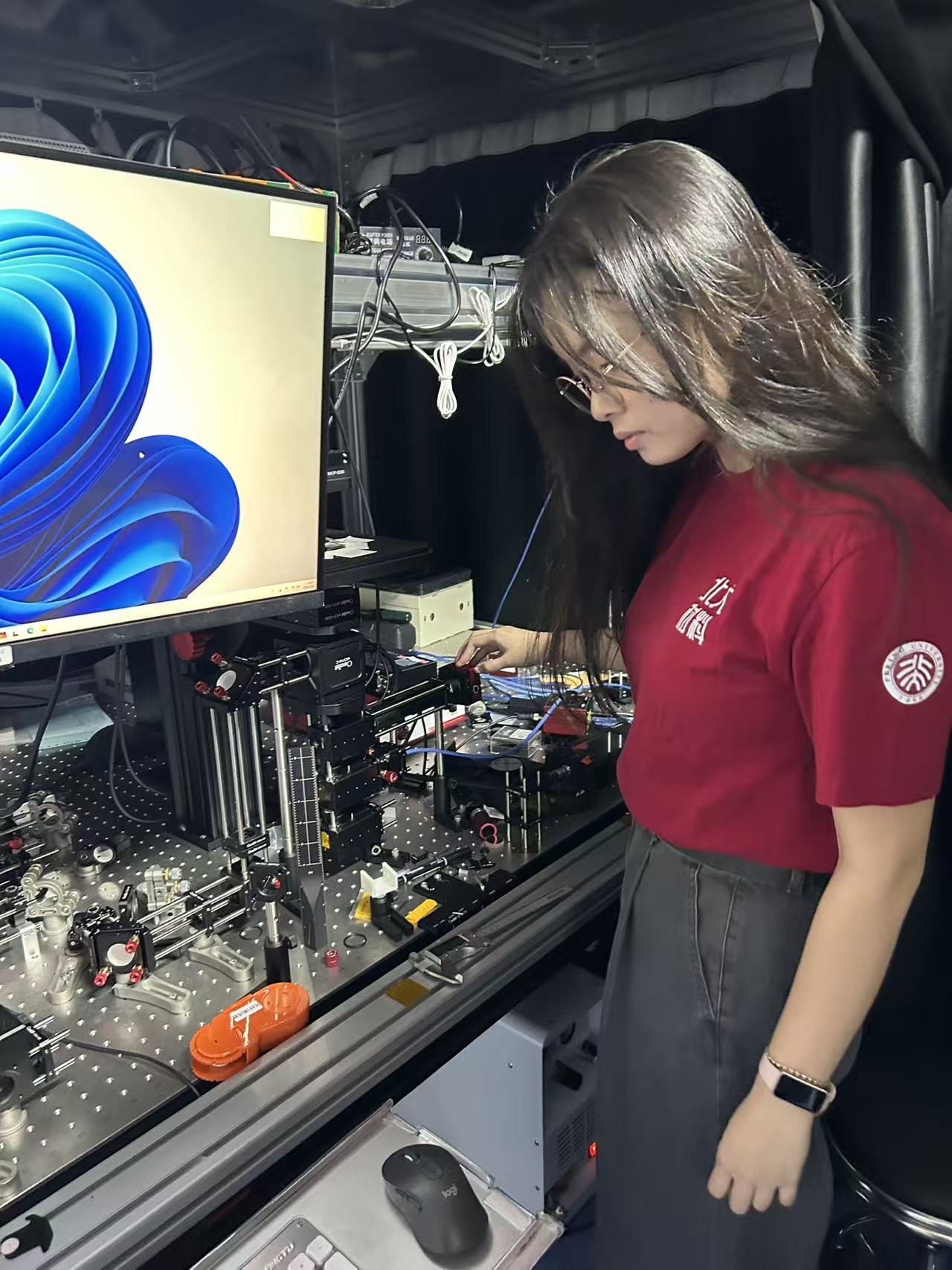
Doris in the lab
She hopes to develop more precise and advanced devices to make disease treatment more efficient. She longs to design smarter, more portable medical equipment so that people in remote areas can also receive timely diagnosis and treatment.
For her, this path is not an abandonment of her original aspiration to "heal the sick and save the dying," but rather a different way to achieve it — moving from saving lives on the operating table to creating hope for countless people in the laboratory.
"I want to provide solutions at the root level,"* Doris says earnestly. *"I hope that the new devices I help develop can transcend geographical and temporal limits to reach lives I may never be able to touch in person."
From operating table to laboratory — the role changes, but the promise to protect life remains unchanged.
2. From Mechanical Engineering to New Materials: Curiosity Never Stops
Jia Hui's curiosity about the world seems innate. His father recalls a funny detail from when Jia Hui was four or five years old: his father often took him to the cinema, but Jia Hui was never focused on the plot.
"My father later joked that while other kids were watching the movie, I was twisting my head to look at the projector behind us," Jia Hui recalls. He was fascinated by the shifting beams of light from the projector, and would even stare blankly at the tiny indicator lights on seat numbers. For him, "how does it work" was far more appealing than "what's playing."This desire to take things apart and understand the logic behind them planted the seed of science in his young heart.

Jia Hui on Lombok Island, Indonesia
With this "never give up until the bottom is reached" attitude, Jia Hui successfully enrolled at the University of Malaya to study mechanical engineering. At that top Malaysian university, he learned the principles of machine operation. But as his studies deepened, he was not satisfied with merely knowing how to apply existing materials — he yearned to understand the microscopic essence of materials.
At the critical moment when he was graduating and contemplating his future, his mentor opened a door to a higher academic platform, recommending him to pursue further studies at Peking University Shenzhen Graduate School.
"When my mentor mentioned PKU, I seized the opportunity without hesitation," Jia Hui says. From Kuala Lumpur to Shenzhen — a journey of thousands of kilometers — it was also a qualitative leap in his pursuit of knowledge.
At PKU, a world‑class academic platform, Jia Hui's vision shifted from macroscopic mechanical structures down to the atomic microcosm. He no longer merely studies "how machines operate" but delves into the nanometer scale, exploring how to "program" new materials that can change the world, starting from the very source.
II. Enlightenment: Intellectual Collisions in Nanyan Garden
Doris: A Lesson Full of Silent Understanding
In her first professional class at Nanyan Garden, Doris encountered a small "challenge."
When the Chinese term *"interface compatibility"* appeared on the screen, she frowned slightly, quickly searching her mind for the corresponding English concept. Her instructor noticed this subconscious pause.
Without making a deliberate stop, the instructor naturally continued, "...this 'eigenstate' — what we often call 'eigenstates' — is a crucial concept in quantum mechanics..." As he spoke, he turned to the corner of the whiteboard and casually wrote down the English term.
Almost simultaneously, the Chinese classmate next to Doris quietly slid her notebook closer and gently tapped the English notes she had already written.
Doris felt a warmth in her heart. The slight language barrier that occasionally emerged in a foreign classroom instantly dissolved in this wordless understanding and kindness.
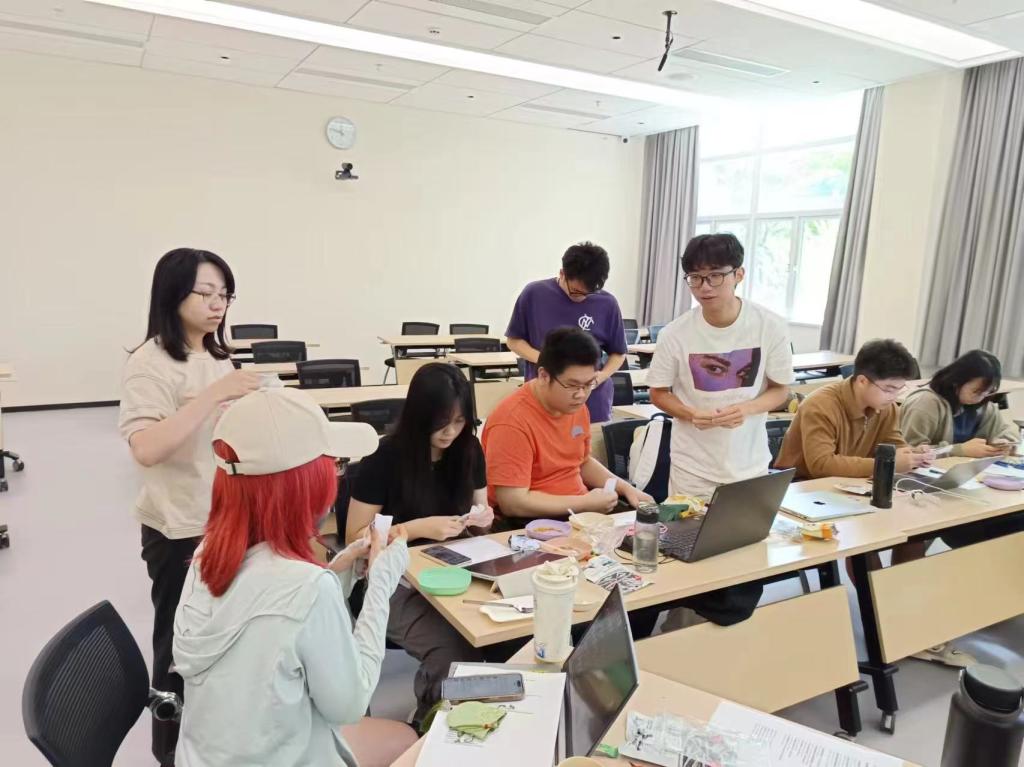
Doris participating in a group discussion
"It felt like just as you were about to grope in the dark, someone gently lit a lamp for you," Doris recalls. "They made me realize what true internationalization at Nanyan Garden means — not just multilingualism, but that deep‑seated thoughtfulness and inclusiveness."
This experience allowed her to deeply love this academic home, full of human warmth, while conquering professional knowledge.
Jia Hui: Awakening — Seeking Truth Beyond Definitions
In a Peking University class, Jia Hui received a seemingly routine task: to present on the seven base units of the International System of Units (SI).
For him, meters, seconds, and kilograms were the most basic language of scientific research. He prepared to quickly state the definitions he had long memorized. *"Meters, seconds, kilograms... these units are like air, surrounding us every day,"* Jia Hui thought. They were just common knowledge recognized by the scientific community — he would simply state the definitions.
But when he reached the origin of the *meter*, the professor interrupted him with a series of sharp, thought‑provoking questions:
"Why do we use the 'meter' as the benchmark for length? How was it defined?" The professor's gaze was piercing as he continued, pointing deep into history: "In 1790, the meter was defined as one ten‑millionth of the distance from the North Pole to the Equator along the Paris meridian. Now here's the question: how do you measure that distance from the North Pole to the Equator? How do you think they measured it in that era?"
Before Jia Hui could recover from the engineering challenge of such a geographical span, the professor delivered the final challenge: "If you were asked to make a 'standard ruler,' how would you do it? What material would you choose? Why?"
These linked questions about precision, history, geography, and material properties left Jia Hui, standing on the stage, deep in thought. He realized that although he used these units every day in calculations, he had never considered the harsh measurement processes behind that ruler, let alone the price paid by predecessors to find a standard substance immune to environmental influences.
This blind spot in class became an awakening for Jia Hui's scientific thinking. He began to understand that the meters, seconds, and kilograms we take for granted are not naturally existing objective truths, but rather a set of rigorously demonstrated and widely accepted rules of the game. True innovation often arises from examining and challenging these most fundamental rules.
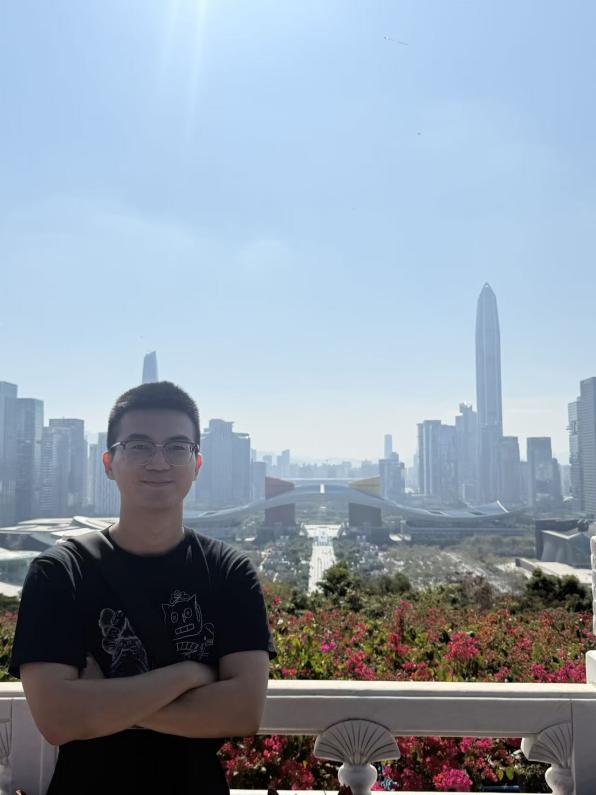
Jia Hui in Shenzhen
"From then on, 'solving problems' took on a deeper meaning for me," Jia Hui concludes. This critical thinking from the source deeply influenced his subsequent research. In the lab, faced with complex experimental parameters, he no longer simply accepts ready‑made standards but dares to question the premises themselves — this courage to trace the origin of the ruler is his most important academic asset from Peking University.
III. Life: The Warm Undertones of Nanyan Garden
Beyond intense research and study, Doris and Jia Hui have also found a vibrant extracurricular life in Nanyan Garden.
Doris: Reuniting with Memories of Home Through Dance
In the dance studio of the art troupe, whenever Doris dances, she feels a familiar sense of security — an emotion that originates from her family far away in Malaysia.
"My mother is a dance enthusiast," Doris shares with a smile. "From a young age, I often followed her in dancing Chinese dances." Those afternoons filled with laughter and joy planted in Doris's heart an early attachment to Chinese culture and dance.
Coming to Peking University and joining the art troupe felt like a long‑awaited homecoming. When the familiar melodies fill the dance studio, she feels a wonderful connection — as if crossing geographical distance to reconnect with the cultural root in her mother's memories.
"But it is here that I truly understood the 'code' behind the dance movements,"Doris says. Under professional instructors, the "cloud hands" and "circling steps" she used to imitate by instinct are now imbued with cultural meaning. "The teacher tells us that this movement is inspired by Dunhuang murals, and that expression should reflect the parting sorrow in Tang poetry. I feel like I am not just dancing, but reading a living, flowing history."
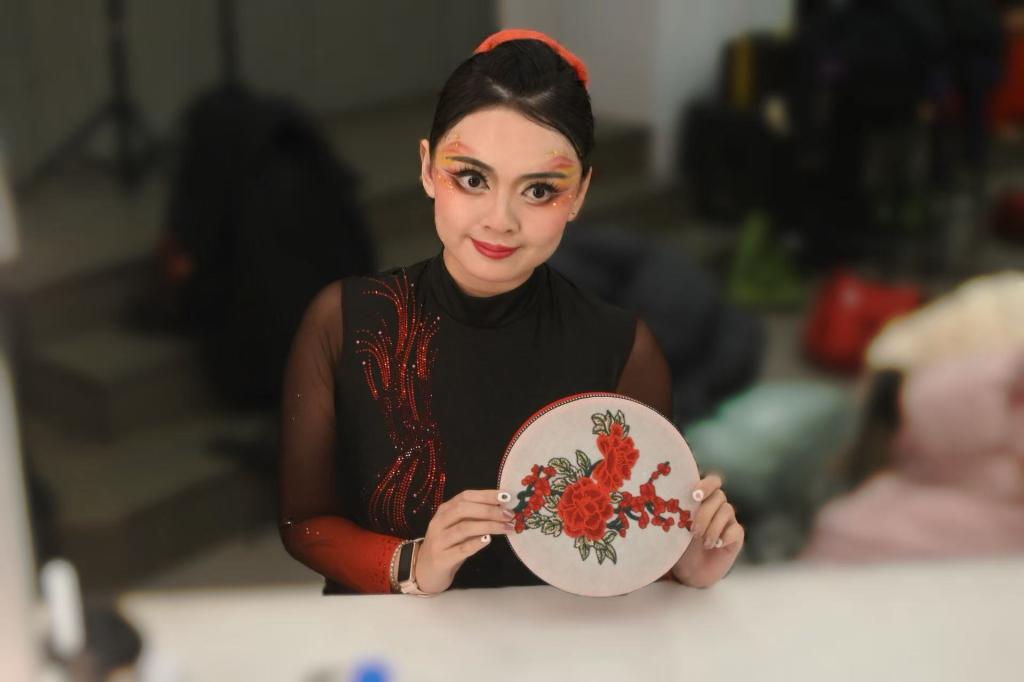
Doris performing Yingge dance
Now, whenever she dons her dance costume and moves gracefully, her heart is stirred not only by artistic pleasure but also by deep emotion. "I think of my mother, of the light in her eyes when she taught me to dance. Now, I feel that I can — on her behalf and my own — come closer to the source of this beauty."
Jia Hui: "Diplomacy" with an Eraser — Peking University International Cultural Festival
At the Malaysian booth during Peking University's International Cultural Festival, Jia Hui enthusiastically introduced a unique kind of showdown to curious friends. Besides promoting hometown delicacies, he particularly wanted to share the most cherished joy of Malaysian students' childhood.
He proposed setting up a special interactive session at the booth: the eraser flipping game, once hugely popular in Malaysian schools.
"It's what we loved to play during recess when we were kids," Jia Hui explained while demonstrating. "The rules are incredibly simple: use your finger to press and flip, so that your eraser lands on top of your opponent's — that's a win."
This easy‑to‑learn but hard‑to‑master little game instantly became the booth's crowd‑pleaser. Watching friends from all over the world lean over the table, fully focused on a perfect flip, Jia Hui felt a strange intimacy. At that moment, the tiny eraser was no longer just a stationery item but a bridge transcending language barriers, bringing Malaysian campus culture vividly to Chinese students and international friends.
That day was also the first time Jia Hui wore traditional Malay attire on a formal occasion, complete with the dignified songkok hat. Standing on PKU's inclusive and diverse stage, he felt genuine pride.
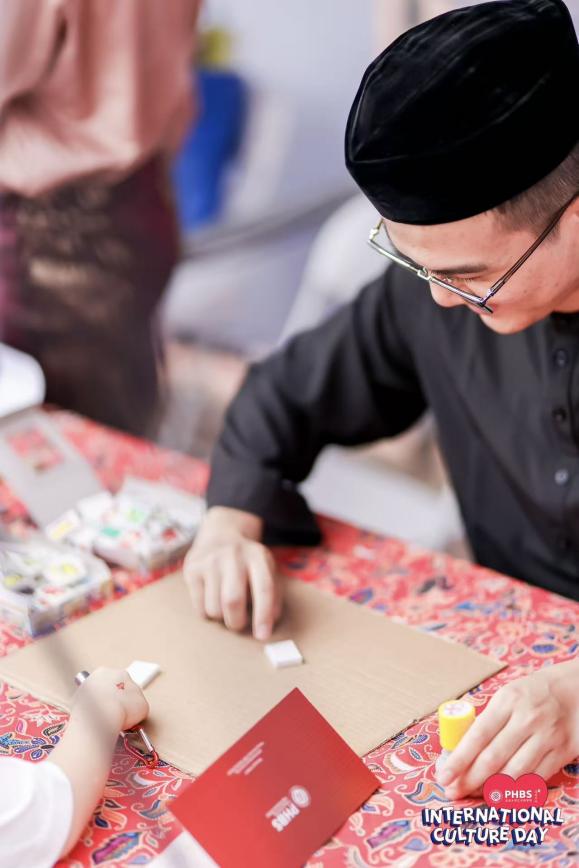
Jia Hui at the International Cultural Festival
"I am very grateful to Peking University for giving me this platform to showcase my hometown culture," Jia Hui said emotionally. "Putting on traditional dress and introducing our childhood games to others deepened my own cultural identity. This was not just sharing experiences — it was building warm, cross‑border friendships here on campus."
IV. Mission: A Shared Aspiration to Return Home After Studies
Regarding the future, Doris and Jia Hui have clear plans. They hope to learn the most cutting‑edge knowledge and technologies at the School of Advanced Materials, and then return to Malaysia to contribute to its development.
Doris says, "Shenzhen is a very vibrant city, with excellent conditions for technological innovation and a dynamic business environment." She believes that the knowledge and experience gained here will help her achieve breakthroughs in the field of medical device R&D.
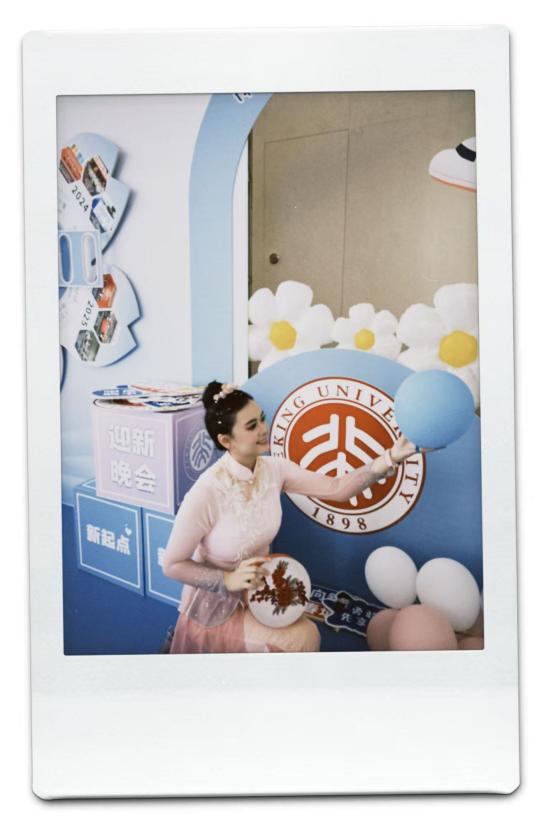
Polaroid of Doris at the freshers' welcome party
Jia Hui is full of anticipation for his research life at the school: "This place has top‑tier research platforms and deep academic heritage. I hope to challenge more cutting‑edge scientific questions here, exploring the essence of materials science from the most fundamental level."
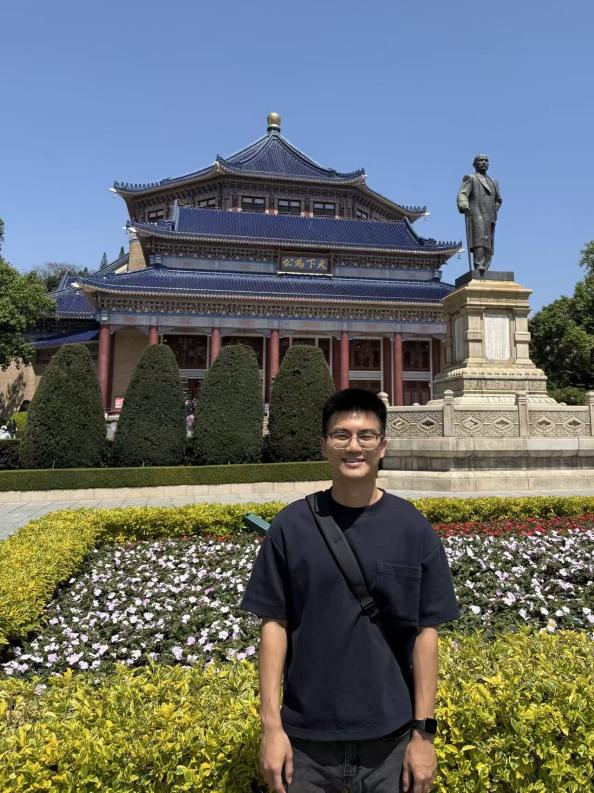
Jia Hui traveling through China's landscapes
As Malaysian Chinese, both Doris and Jia Hui are keenly aware of their unique advantage: they can understand the essence of Chinese culture while also addressing the actual needs of Malaysia, serving as bridges for technological and cultural exchange between the two countries.
V. Epilogue
Every day at Nanyan Garden, Doris and Jia Hui work hard to realize their dreams. Carrying the multicultural background of Malaysia, they immerse themselves in PKU's academic atmosphere, absorb Shenzhen's innovative energy, and write their own chapter of youth.
As the motto of the School of Advanced Materials advocates, they are building a solid academic foundation step by step, starting with making a good screw. We believe that in the near future, they will complete their studies successfully and bring advanced materials science and technology back to Malaysia, contributing to their home country's development and becoming envoys of friendly exchange between China and Malaysia.
The ripples of Mirror Lake, the tides of the South China Sea. The Nanyan chapter of these two Malaysian students continues to unfold.