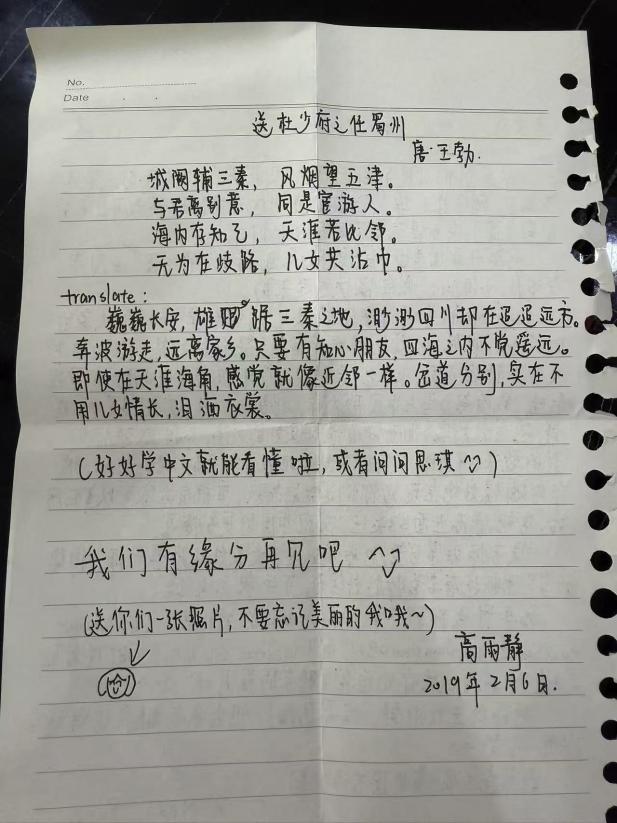
When Churaiwan Sae-Fan was in middle school, she received a farewell letter from a teacher in China. In the letter, the teacher quoted these famous lines from a poem by Wang Bo, a poet of the Tang Dynasty. Knowing that Churaiwan might not fully understand them, the teacher thoughtfully included an explanation and left her with a piece of advice: study Chinese well, visit Beijing, Shanghai, Guangzhou and Shenzhen one day, and perhaps even set Peking University as a goal.
Churaiwan never forgot that letter. She may not have fully understood the poem at the time, but the teacher’s words stayed with her.
Years later, the Thai-born student made that journey across borders and cultures, coming to China to pursue her studies. From earning her undergraduate degree in Chinese Language and Literature at Peking University to pursuing a master’s degree in International Chinese Language Education at Peking University Shenzhen Graduate School, her journey has brought her a long way from that childhood aspiration. Looking back, the modest letter seems to have been a quiet beginning to the story she continues to write today.
Part 1 | Between Two Cultures: Discovering a More Complete Sense of Self
Churaiwan’s connection with the Chinese language began at home. Her father is Thai, while her mother is from Guangdong, China. When Churaiwan was young, her mother taught her Chinese characters, introduced her to idioms and traditional stories, and showed her how to write with a calligraphy brush. During festivals, they also made zongzi and put up Spring Festival couplets together. While some children learned Chinese primarily for examinations, Churaiwan learned it because she wanted to understand the stories her mother told about her own childhood.
For Churaiwan, Chinese was never simply a foreign language. It was part of her mother’s voice and a doorway into her mother’s hometown.
Yet this early introduction did not mean she had a complete understanding of China from childhood. As she grew up, she encountered stereotypes and one-sided opinions about the country. Familiar with both cultures, she often found herself in the position of an interpreter, not only explaining what she had seen in China to her Thai friends, but also gradually revisiting and correcting her own perceptions along the way.
As she grew older, she became increasingly aware that she was standing at the intersection of two cultures.
Her father embraced a more relaxed approach to education, believing that children should be happy and enjoy their childhood. Her mother, on the other hand, encouraged her to be cautious and considerate of others. At school, Churaiwan could understand the perspectives and circumstances of her Thai friends, while also wanting those around her to see a more authentic picture of China. Being caught between two perspectives was not always easy, but over time, she learned to look at the same situation through two different lenses.
This experience also shaped her personality. When speaking Thai and spending time with Thai friends, she considers herself more laid-back and less likely to dwell on small matters. When speaking Chinese with her mother or Chinese friends, however, she becomes more proactive and thoughtful, often reflecting on what she has said even after a conversation ends. Her friends sometimes joke that she seems like two different people.
So, which one is the real Churaiwan?
She does not find the question troubling. “Both are me,” she says with a smile, adding that her Gemini personality might have something to do with her ability to adapt so easily.
Perhaps this is one of the gifts of growing up in a multicultural environment: there is no need to rush to define where one belongs, nor to choose sides between two cultures. Different languages, ways of thinking and life experiences do not have to contradict one another. Together, they shape how she understands herself and the world around her.

Part 2 | From Yanyuan to Nan Yanyuan: A New City, A New Chapter of Growth
Coming to China marked an important turning point in Churaiwan’s life.
In 2022, she left Thailand for the first time to study in Beijing. She had to gradually adjust to life in an unfamiliar city. Then, she subsequently enrolled in the Department of Chinese Language and Literature at Peking University, beginning her undergraduate studies.
After coming China, she soon discovered that learning Chinese and studying academic subjects in Chinese were two very different things.
Although she had been familiar with the language from an early age, there was still much she needed to relearn. Classical Chinese, in particular, often left her feeling both familiar and unfamiliar. “I could recognize every character, but once they were put together, I had no idea what they meant,” she recalls. Recognizing the characters was rarely the difficult part. The real challenge was understanding the context in which they were written—the meaning each character carried at that particular moment in history, and the weight of a sentence shaped by a thousand years of history.
The challenges of her academic courses, combined with the intense dedication she observed among her Chinese classmates, exposed her to a much faster pace of learning. The pressure could be considerable. At its most overwhelming, she jokes, she even started getting white hair.
Yet there were also people and experiences that helped her through those difficult moments. Whenever she encountered something she did not understand, her teachers patiently explained it until she grasped the concept. Her friendships from the preparatory program also continued long after everyone moved on to different schools and departments. They still made time to have meals together, celebrate birthdays and revisit their former teachers. Thousands of kilometers away from home, these small, familiar interactions gradually made an unfamiliar place feel like home.
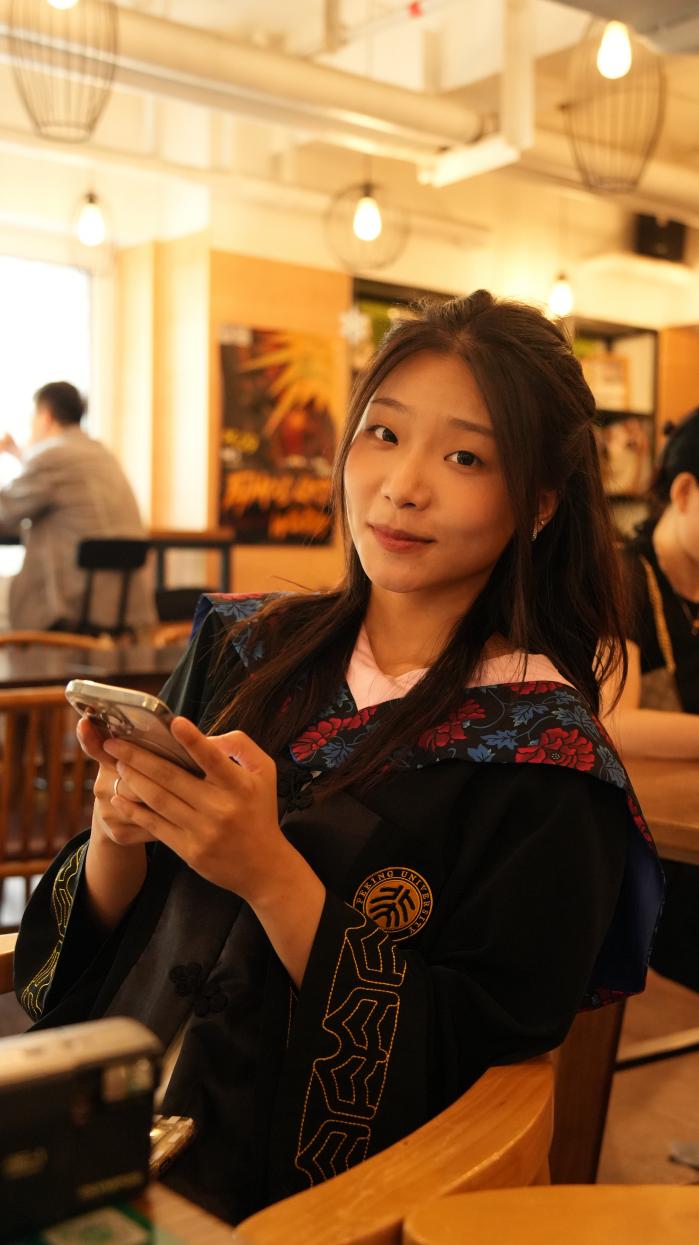
As graduation approached, Churaiwan was uncertain about whether to continue her studies or remain in Beijing. By chance, she came across the International Chinese Language Education program at PKU Shenzhen.
Beijing offered a rich historical and cultural heritage as well as a strong academic atmosphere. Shenzhen, by contrast, was more open and international, with closer connections to technology and industry. Rather than staying in an environment she had already grown accustomed to, Churaiwan wanted to experience a different city, encounter different people and discover another side of society.
In the end, she listed PKU Shenzhen as her only choice. This meant leaving Yanyuan, which had been her home for four years, and starting over somewhere entirely unfamiliar. Nevertheless, she decided to take the leap. “What attracted me was not only the program itself, but also Shenzhen as a city.”
When her admission letter finally arrived, it felt like an affirmation of the decision she had made.
Even so, her first days in Shenzhen were not entirely easy. Living alone in an unfamiliar city, with a new dormitory, canteen and campus to get used to, she occasionally questioned her decision. Had she made the wrong choice? Why had she traveled all this way to start over by herself?
The turning point came sooner than she expected. As campus life gradually unfolded, she began to find her place through activities and interactions with others.
At the opening ceremony, Churaiwan represented the School of Humanities and Social Sciences and took part in the university badge presentation ceremony. The badge was pinned onto her by Zhang Shan, the Olympic champion. For a student who had traveled all the way from Thailand, the moment carried special meaning. The university badge was more than a symbol of identity. It felt like a quiet affirmation: You have arrived, and now it is time to begin the next chapter.
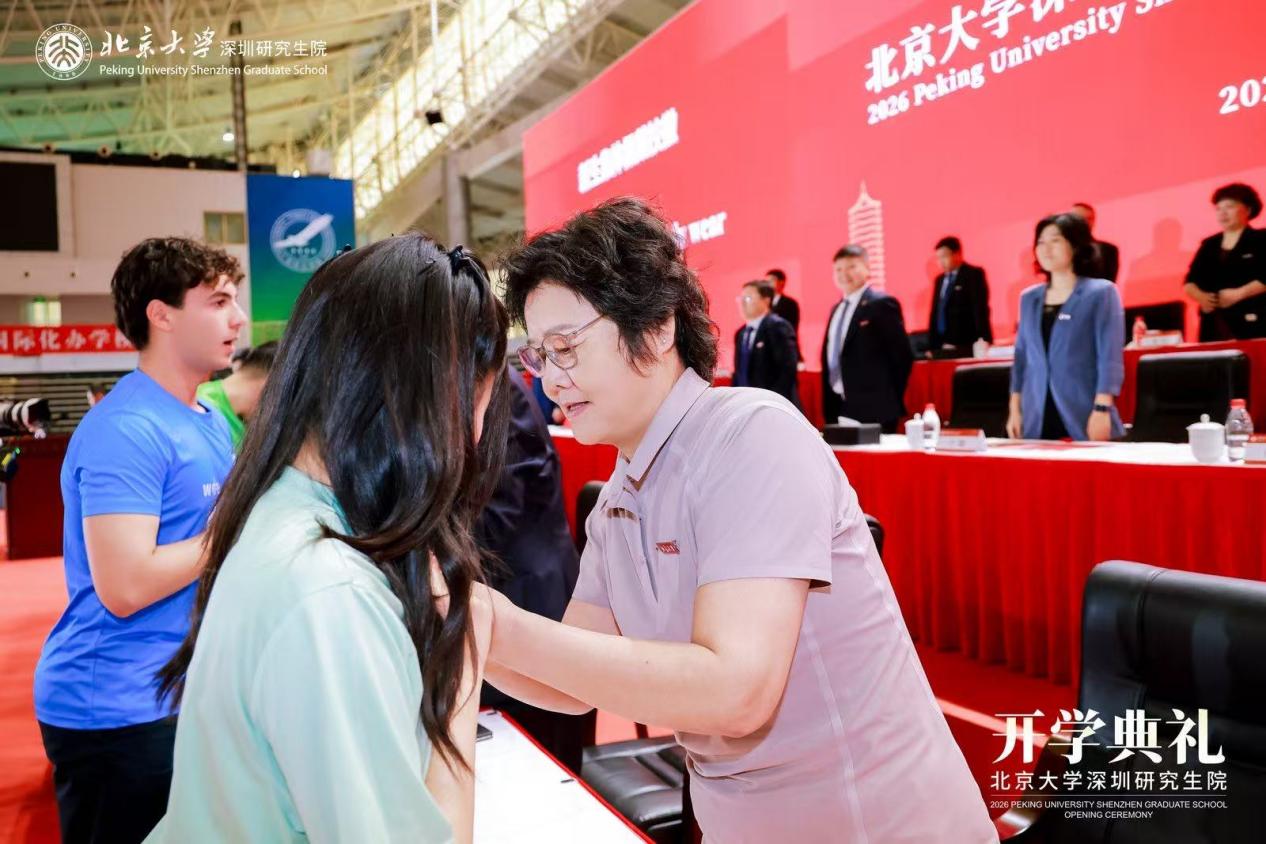
Olympic Champion Zhang Shan pins the university badge on Churaiwan
She soon found herself immersed in campus life. She joined the Nanyan News Agency, participated in the first run of the academic year and played basketball with fellow students. When she joined a team with students from the other schools, she met peers whose academic backgrounds were completely different from her own.
She also took part in a visit to Nanshan District organized by her school, traveling from the Honghualing base of Nanshan Intelligent Manufacturing to Nantou Ancient Town. One stop offered a glimpse of a modern industrial workshop filled with machinery and activity; the other revealed narrow old streets, traditional architecture and the rhythms of everyday life. Within a single day, she encountered two distinct sides of Shenzhen. She witnessed the city's vitality in technological innovation while also discovering its historical and cultural heritage, gaining a deeper appreciation of how the two coexist and complement each other.
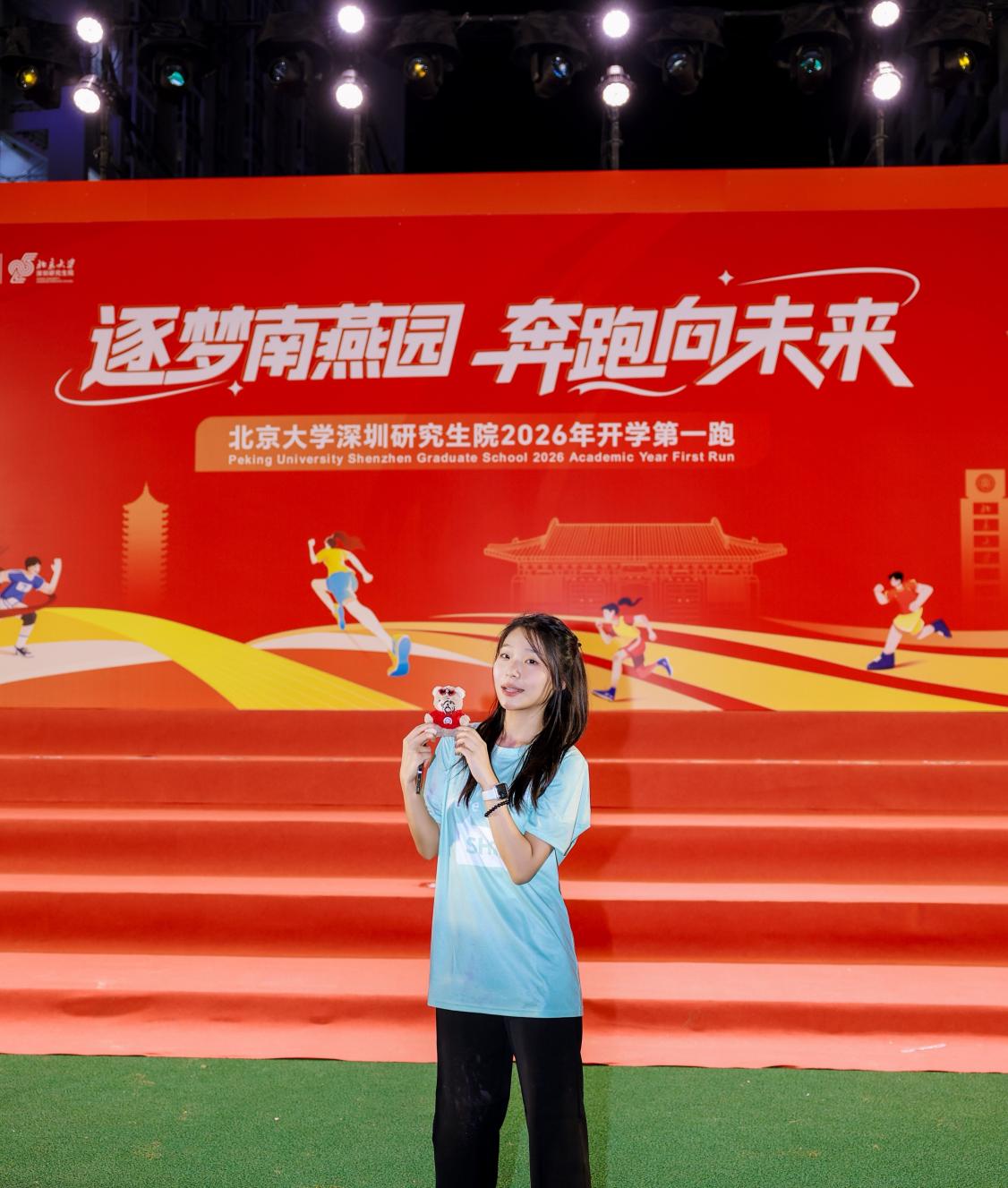
Churaiwan participated in the 2026 First Run of the New Academic Year at PKU Shenzhen
From writing articles for the news agency to running on the track, from finding teammates on the basketball court to collaborating with students across disciplines, Nan Yanyuan gradually opened up a world beyond the classroom. Churaiwan began to realize that learning did not happen only in lectures. It also took place through collaboration, campus activities and the seemingly ordinary moments spent together. These experiences helped her put down roots in a city that had once felt so unfamiliar.
The journey from Yanyuan to Nan Yanyuan was about more than moving from one city to another. Beijing had allowed her to immerse herself in history and academic study, while Shenzhen opened another window onto the world. What initially seemed like a straightforward decision about further education became the starting point of a new way of understanding the world.
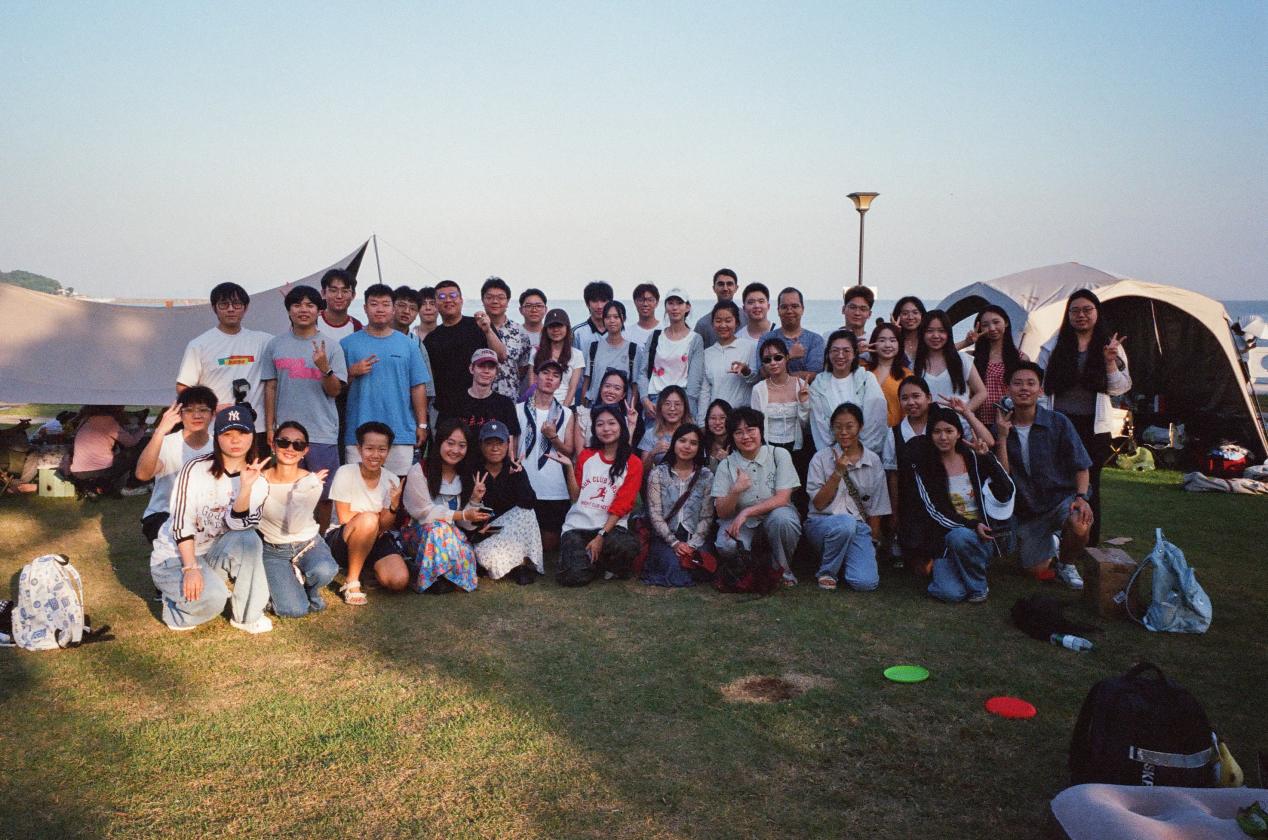
Churaiwan joined in a team-building activity with the Nanyan News Agency
Part 3 | Where Language Meets Technology: Exploring New Possibilities
If studying in Beijing and Shenzhen broadened Churaiwan’s understanding of language and culture, stepping beyond the classroom and participating in real-world international exchanges encouraged her to reconsider the possibilities of her academic field.
During her undergraduate years at Peking University, she participated in reception work for Princess Maha Chakri Sirindhorn of Thailand during her visit to the university, helping coordinate schedules, meeting arrangements and other logistical matters. She also volunteered at the 22nd Beijing Forum, where she was responsible for liaising with university presidents and vice presidents from Thailand.
As a Thai student, Churaiwan was familiar with Thai cultural backgrounds while also understanding the expectations and practices of Chinese hosts. In these international exchanges, language skills were certainly important, but so was the ability to understand and communicate across different cultural conventions. Through these experiences, she gradually realized that intercultural communication was about much more than translating words from one language into another. It also required an understanding of how people express themselves and behave within different cultural contexts.
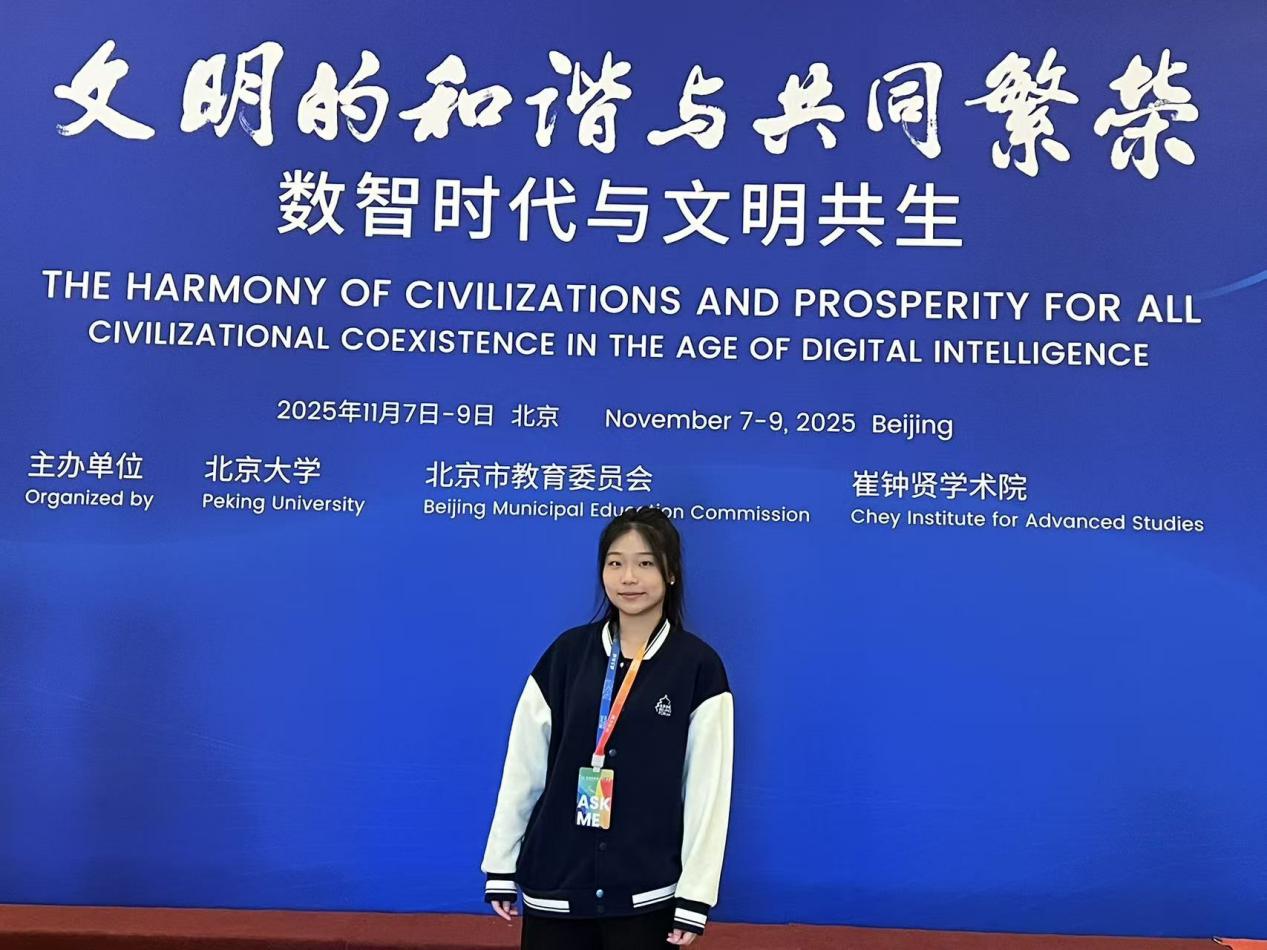
Churaiwan volunteered at the 22nd Beijing Forum
An exchange between Thai and Chinese financial institutions gave her an even clearer sense of how her language skills could be applied to specific industry needs.
While assisting communication between a Thai securities company and a Chinese securities company, she was responsible for translation and meeting minutes. The discussions covered semiconductors, artificial intelligence, China's National Integrated Circuit Industry Investment Fund and the 15th Five-Year Plan. For someone without a technical background, every one of these topics presented a challenge.
Her task was not simply to translate each sentence spoken by either side. She needed to understand what was being discussed and accurately convey the concerns and intentions behind each statement. Before the meeting, she prepared by researching unfamiliar concepts. During the discussions, she listened carefully, identifying key points and distinguishing them from background information.
“More important than translating the language is making sure the information actually gets across.”
Looking back on the experience, Churaiwan emphasizes that understanding what each side genuinely wanted to know and communicate was essential. Accurate communication depended not merely on linguistic conversion, but on grasping the intentions of both parties and ensuring that their messages were conveyed clearly. The experience also showed her that language skills could open doors to unfamiliar fields and help build connections between people from different professional backgrounds.
It gave her new ideas about her future career. She does not intend to become a technical expert in artificial intelligence or semiconductors. Instead, she hopes to build on her language skills and cross-cultural understanding while developing a broader knowledge of technology and industry. She would like to participate in exchanges and cooperation between different countries and sectors. In particular, she has begun paying attention to opportunities for China-Thailand cooperation in increasingly prominent fields such as artificial intelligence and semiconductors.
More recently, she joined faculty members and fellow students from the School of Humanities and Social Sciences on a visit to Shenzhen Octopus Times Technology Development Co.. There, she learned about applications of artificial intelligence and digital technologies in language learning and intercultural communication. She also exchanged ideas with company representatives about industry developments and career opportunities. For the first time, what she had learned in the classroom began to connect directly with the needs of the industry.
Her observations of intercultural communication also extend to everyday campus life. International Culture Day and other campus activities provide opportunities for students to meet people from different backgrounds, but a single event does not necessarily lead to lasting connections. Genuine familiarity develops through long-term interactions: attending classes together, sharing meals and dealing with everyday matters. Over time, people gradually come to understand one another's habits and ways of thinking.
From professional communication between financial institutions to language-learning applications in technology companies, and from industry visits to observations of everyday interactions, Churaiwan has gradually come to understand that effective communication requires both accuracy and mutual understanding.
The value of studying languages, she has realized, extends far beyond textbooks and classrooms. It offers a way to enter different fields and connect with different cultures. In a city like Shenzhen, where technology and industry are closely intertwined, students have opportunities to step outside the classroom, discover what industries actually need and reconsider how their knowledge can be put to use.
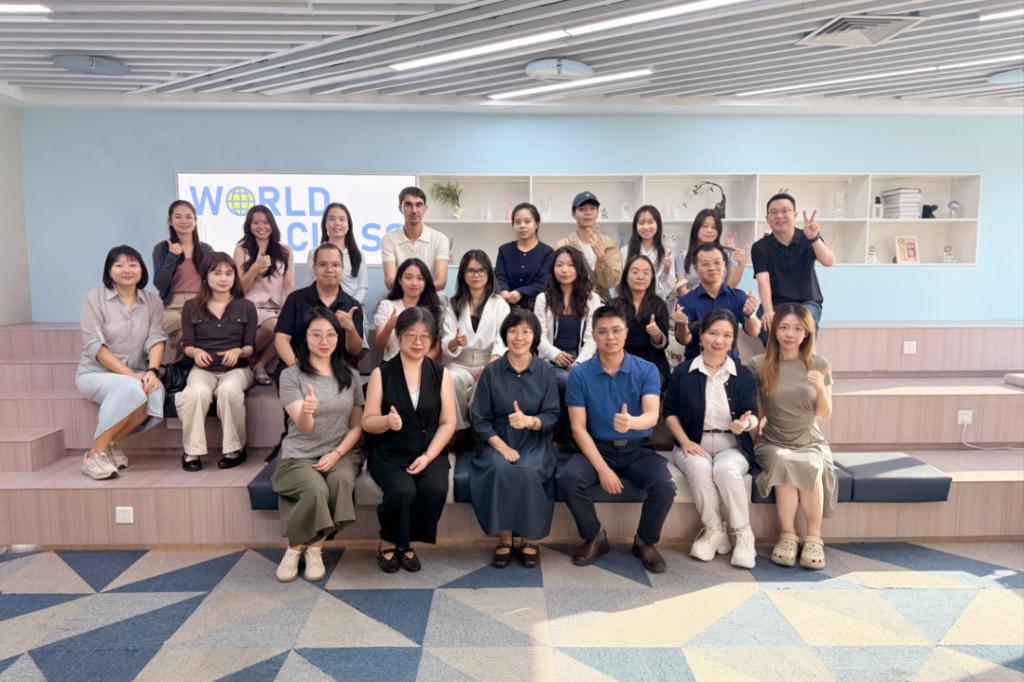
Churaiwan visited Shenzhen Octopus Times with faculty and students from the SHSS
Part 4 | Looking Beyond Borders Through the APEC Lens
From Thailand to Beijing and then to Shenzhen, Churaiwan’s educational journey has gradually broadened her perspective and encouraged her to look beyond national borders.
Living in Shenzhen, a highly international city with a vibrant environment for technological innovation and industrial development, has given her opportunities to meet people from different countries and academic backgrounds. It has also encouraged her to pay closer attention to the common challenges facing countries as they pursue development.
As attention turns to the 2026 APEC meetings and related discussions, she has begun reflecting on the shared challenges facing the Asia-Pacific region in technological development and regional cooperation. From the industrial transformation driven by artificial intelligence to the application of digital technologies in agriculture, as well as food security, the digital divide and cybersecurity, these issues have made her realize that technological progress is not simply about the development of individual industries. It is also closely connected to the social needs and development opportunities of different countries and regions.
In addressing these shared challenges, communication and cooperation between countries are particularly important. Greater understanding can be built through dialogue, while cooperation can create opportunities to find solutions.
Looking ahead, Churaiwan hopes to continue drawing on her language skills while expanding her understanding of technology and industry. She does not want to limit herself to a single familiar field. Instead, she hopes to remain open-minded, engage with different industries and cultures, and gradually discover a direction that suits her through continued learning and exploration.
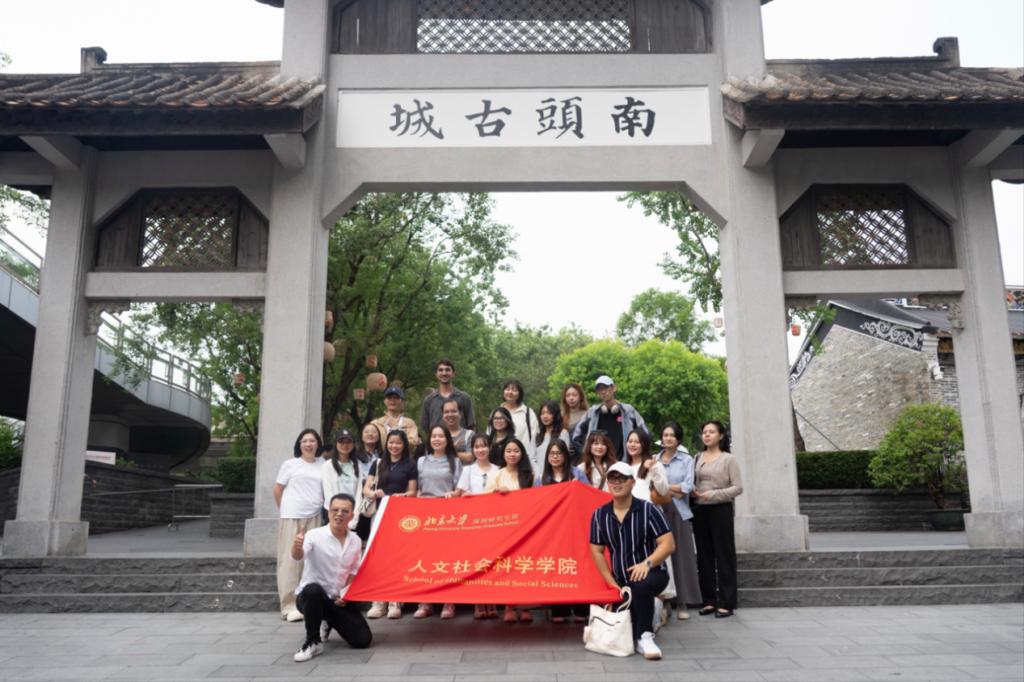
Churaiwan took part in a visit to Nanshan District
Looking back on the past few years, Beijing and Shenzhen have been like two different windows onto the world. With its profound historical and cultural heritage and rich academic traditions, Beijing helped her understand China's traditions and cultural foundations. Shenzhen, meanwhile, showed her a more open and innovative side of the country, while offering opportunities to explore the technology sector and participate in diverse social and professional experiences.
Each city has its own character, and each offers young people different opportunities for growth. Churaiwan's understanding of China is no longer confined to a single impression. Instead, it has become increasingly nuanced and multidimensional.
For young people considering studying in China, she hopes they will do more than observe the country through textbooks. She encourages them to immerse themselves in everyday life: experience a city, meet people from different backgrounds and discover what is happening beyond the classroom. Choosing a city is, in a sense, also choosing a way to understand China. Only by connecting what they learn with the realities of society can their horizons continue to expand.
From the aspirations sparked by a letter to the exploration of different cultures, academic disciplines and cities, Churaiwan's story is still unfolding.
She remains open to what the future may bring. Growth does not necessarily follow a predetermined path. What matters is staying curious, being willing to step beyond familiar surroundings and seeking new possibilities in a wider world.