When 24-year-old Russian girl Polina Bibchenko, stood on the boardwalk of Shenzhen Bay Park, watching drones glide overhead to deliver milk tea precisely to a campsite across the water while wintering migratory birds rested peacefully on the nearby mudflats – at that moment, she suddenly understood the unique character of this city: it is both a futuristic "Silicon Valley of hardware" and a place that retains the most delicate consideration for nature.
As a 2025 Master's student in Management at Peking University HSBC Business School (PHBS), Polina embodies multiple identities: a genuine Russian girl raised in Khabarovsk in the Far East, the only Russian-speaking trainee at The Peninsula Beijing ,an active member of Nanyan Art Troupe’s Chorus, and an ENFP personality type often mistaken for an introvert. After half a year in Shenzhen, she has not only adapted to the humid southern air but has also found her own rhythm in this city,which she describes as "a place where technology and nature reconcile."
"Half Northeasterner": A Cultural Bridge from the Far East to China
Polina's hometown, Khabarovsk, sits on the Amur River in the Russian Far East, facing Fuyuan in China across the river. "From my window, I could see buildings on the Chinese side of the Heilongjiang River. When I was very young, I loved pressing my face against the window, imagining how people lived in that neighboring country so close by." This geographical proximity subtly guided her eastward.
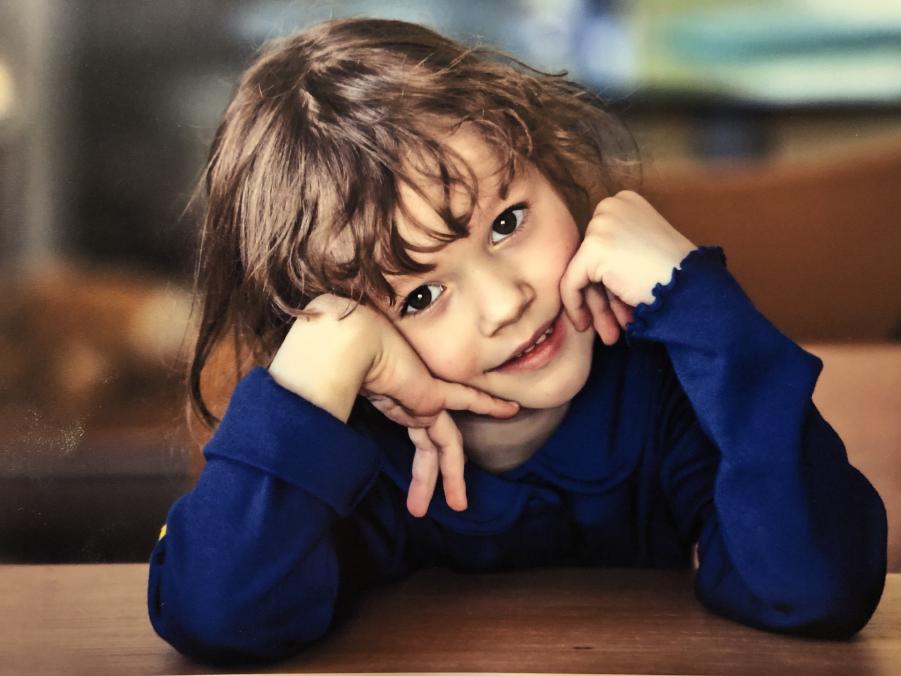
Childhood photo of Polina
At 12, she began learning Chinese in her hometown. "Progress was slow back then. There was no language environment, no Chinese friends, just textbooks and voice packs from my earphones. I thought I would never be able to speak Chinese fluently." The turning point came in her final year of high school, thanks to a Chinese language teacher who had studied in Khabarovsk and later settled there. "His classes dramatically improved my listening and speaking. I could finally talk about daily life in Chinese!" Recalling this, a nostalgic look appears on her face. Although her Chinese is now fluent and indistinguishable from a native speaker's, every beginning leaves its own profound, luminous mark in memory.
In 2019, at 17, Polina arrived in Tianjin with the determination to "study my undergraduate degree in Chinese." The subsequent two and a half years of pandemic isolation didn't dampen her enthusiasm. During her hotel management studies at Beijing Hospitality Institute, she was the only international student in her class. She completed a 13-month front desk internship at the Peninsula Beijing. "That was my first real job – handling all kinds of unexpected situations in my third language. Every day was like a battle, but that's how my language skills were really forged." Her tone is light now, but it makes one imagine the numerous difficulties she overcame in a foreign country, step by step, to become whom she is today.
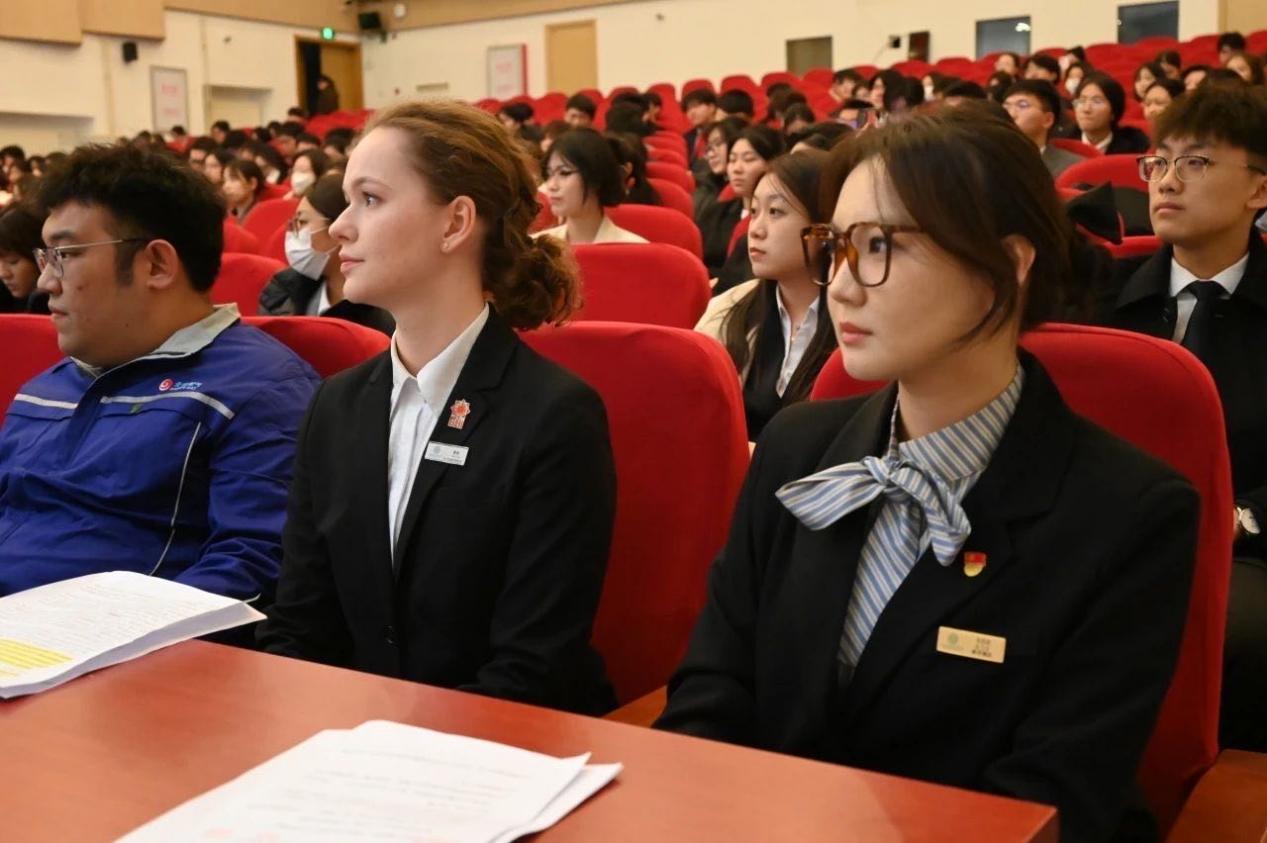
Photo of Polina during her undergraduate years
Interestingly, both her first Chinese teacher and her best friend in China are from the Northeast. "Even now, many of my Chinese friends say my Chinese has a bit of a Northeastern accent. Oh my!" Polina laughs, admitting it. "For example, I tend to say '咋整 (zǎ zhěng)' instead of '怎么办 (zěn me bàn)'." This subtle regional imprint makes her happily accept the title of "half Northeasterner."
Choosing Peking University Shenzhen Graduate School: Deepening Studies Where Logic and Sensibility Intertwine
Her undergraduate study in hospitality management allowed Polina to gradually grasp the core of management studies – "a world where logic and sensibility are tightly interwoven." She realized that good managers can't just rely on textbooks; they need a kind of internally cultivated judgment. "The values advocated by Peking University resonate deeply with my understanding of life."
Shenzhen, an immigrant city with the slogan "Once you arrive, you're a Shenzhener," provided the soil she longed for. "The economy develops quickly here, the innovation atmosphere is strong, and it's very friendly to graduates. More importantly, the internationalization level at Peking University Shenzhen Graduate School is high. Growing together with students from all over the world – I'm finally not the 'only foreigner' anymore!"
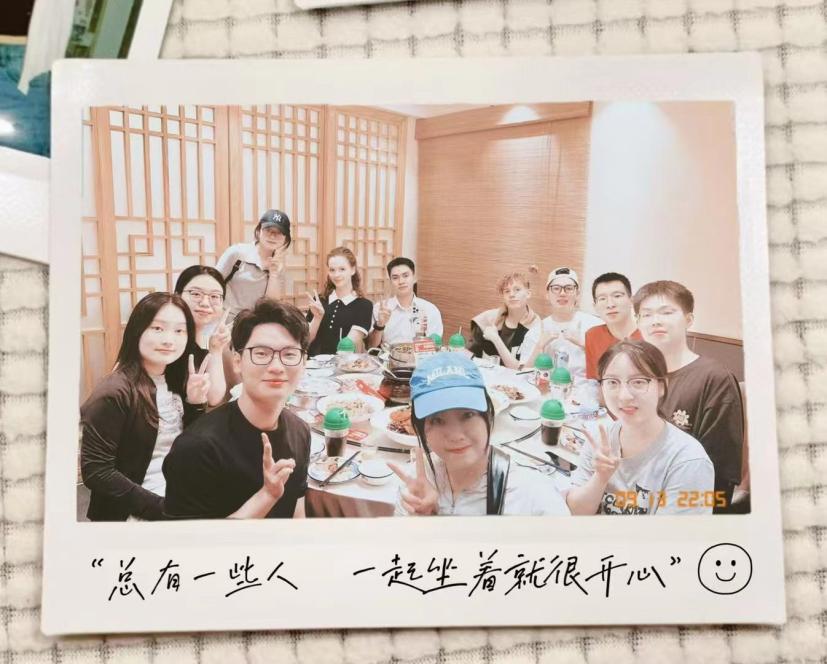
Polina with friends from Nanyan News Club
Arriving in Shenzhen in August, the sudden downpour on registration day caught her off guard. "I was stuck in my hotel room, watching the rain, almost like a waterfall, outside the window. I found it both funny and shocking – I'd never seen such heavy rain!" But she quickly adapted to the humidity. "Compared to the dry northern winters, I actually prefer this climate."
On campus, the new facilities, friendly staff, and diverse students' backgrounds helped her quickly find a sense of belonging. "People from completely different cultural backgrounds can sit together, discuss, cooperate, and find so many common topics... This wonderful feeling was the first gift PKU Shenzhen gave me, and one of the reasons I love it so much."
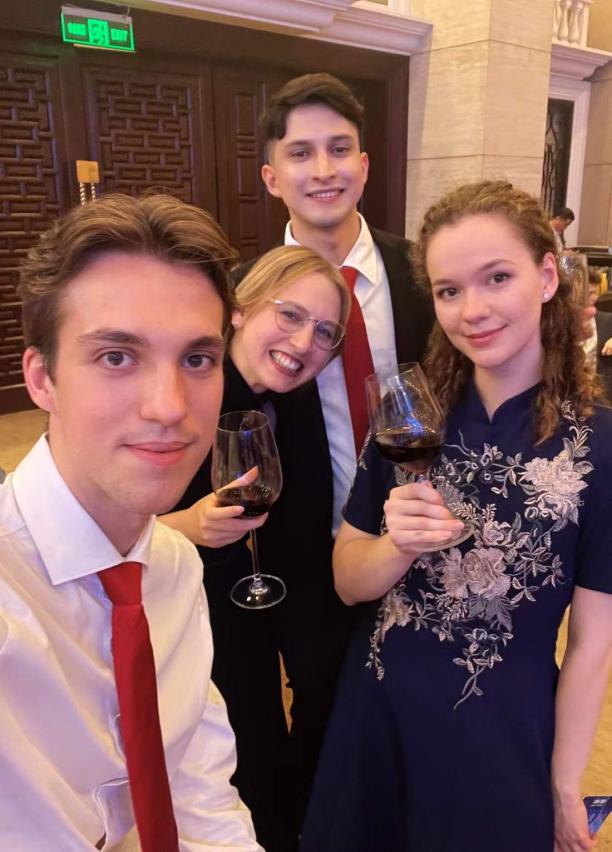
Polina with international student friends
Shenzhen Style Living: When Drones and Migratory Birds Share the Skyline
After six months in Shenzhen, what impresses Polina most is how the city, despite its rapid development, still reserves a gentle place for nature.
"In Talent Park, drones deliver milk tea and robots make coffee, but simultaneously, the city's greenery is meticulously preserved, parks are everywhere." She specifically mentions a small detail: once online, she saw someone wondering why Shenzhen Bay Park doesn't turn on its lights at night. The answer from local netizens warmed her heart – because every winter, a large number of migratory birds fly from overseas to winter there, and the wetlands need to remain dark to avoid disturbing their rest.
"At that moment, I thought, this city is truly lovely," Polina says. "Not every 'smart city' would prioritize this. Shenzhen showed me that technology and nature don't have to compete; they can coexist."

Shenzhen street view photographed by Polina
Integrating into local life as an international student wasn't instantaneous. "Actually, during my undergraduate years, compared to back home,I had become more introverted," she admits. "But here, I've been very lucky." She joined the joint choir of Peking University Shenzhen Graduate School and Tsinghua University Shenzhen International Graduate School – a group of people genuinely passionate about music. "Every rehearsal, from reading music and vocal exercises to joking during breaks,and finally standing on stage together... this process creates deep bonds."
Before her first performance,Polina was nervous,her palms sweaty.Amidst the backstage chaos, a choir member silently handed her a microphone and whispered, "Good luck." She still remembers that moment. "In a new country, a new group, someone sees your nervousness and wants you to sing well... this kind of quiet support stays with you for a long time." The feeling of being gently embraced in her nervousness has stayed with her, quietly accompanying her whenever she steps onto the stage to sing.
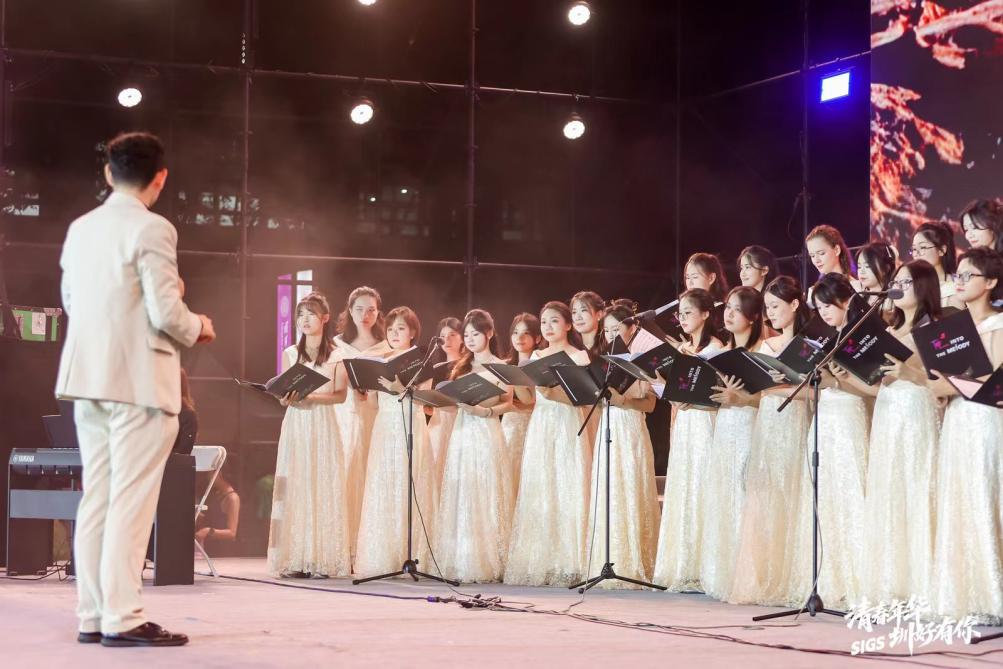
Polina participating in a choir performance
An Awakening Moment in Class: The Distinction Between Role and Identity
Many courses at PHBS left a deep impression on her. One business ethics class, in particular, became an intellectual "awakening moment."
During one session, Professor C.James Yen asked each student to write down six roles they play in life – daughter, student, friend, intern... then gradually cross them out until only one remained. Next, they added future roles (employee, partner, mother, manager) and repeated the process of elimination. When the "ultimate one" emerged, Professor Yen introduced a crucial distinction: the difference between role and identity. "He asked us, does that last role we kept truly represent who you are?"
At that moment, Polina realized that she often mistook temporary roles – like student, intern, club member – for identity itself, investing enormous energy into proving herself within them. "But roles are situational, they change over time; identity should be deeper, more stable." This insight changed her understanding of personal development and career choices. "This is one of the most valuable takeaways I've gained here."
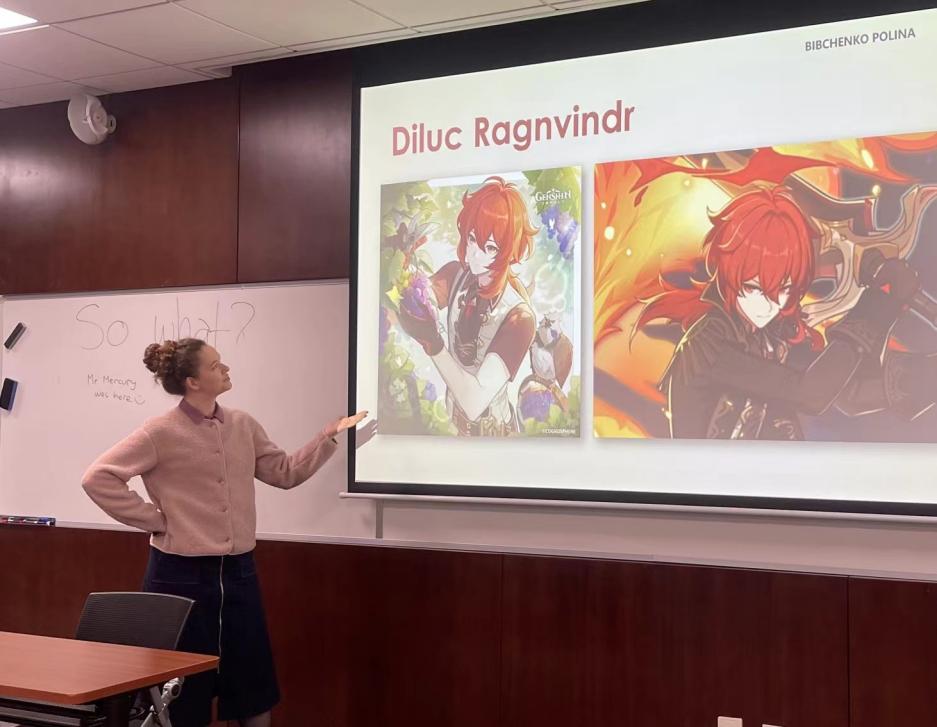
Polina during a group presentation
In cross-cultural team collaborations, she also gradually found her place. During one group project, an international student directly pointed out another student's mistakes in the group chat. Although the intention was constructive, the suggestion sparked a minor misunderstanding. Polina realized this was simply due to differences in Western and Chinese communication styles. "In China, people are more accustomed to expressing needs indirectly, with more consideration for relationships. In Western countries, people often prefer direct, task-oriented communication." Standing at the bridge between East and West, she cleverly spoke privately with the two students, first showing understanding, then guiding them to see the other's perspective, successfully resolving the misunderstanding and allowing the group to complete their project smoothly.
This incident made her realize she had quietly adapted to Chinese communication styles while retaining her understanding of Western perspectives. "Now, when I'm in teams with both Chinese and international students, I often help both sides understand each other's intentions – not just the language, but the logic behind the culture. It's a small contribution I can make." And this modestly described "small contribution" often serves as a map through the labyrinth of cultural differences, guiding the way toward remarkable collaborations.
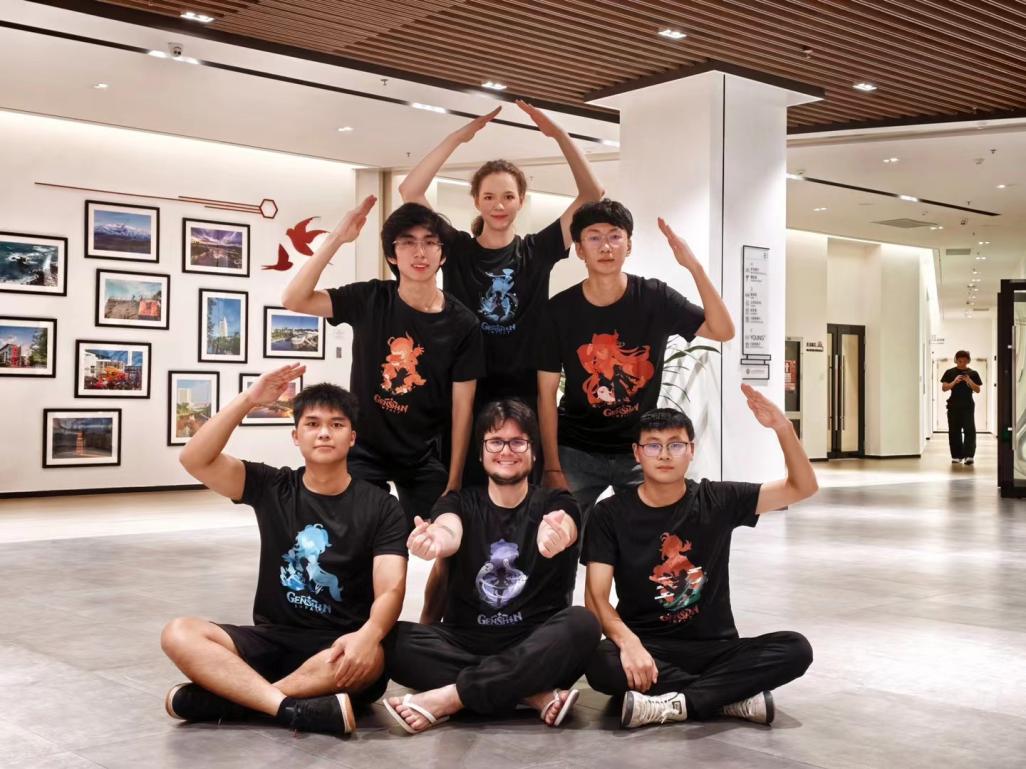
Polina with group members
Digital China: The Convenience Hides "Human Warmth"
Discussing higher education in China, Polina characterizes it as "rigorous and structured." Her undergraduate experience, which included a mandatory 13-month internship, showed her the emphasis Chinese education places on practical ability. "It exposes students to the real workplace early on, cultivating problem-solving skills."
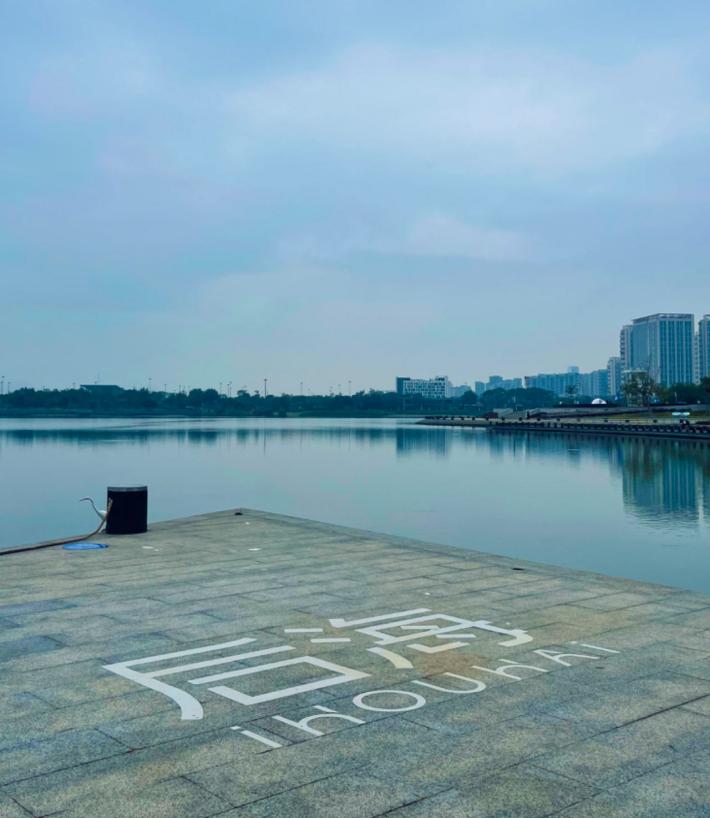
A photo of Shenzhen taken by Polina
Living in digital China daily makes her feel "spoiled every time I go back home." "Taobao packages arrive in a day or two, you can order food delivery anytime, you don't need cash when you go out, almost everything can be done within one or two apps." But what touches her most is that this convenience hasn't made the city cold. "In Shenzhen, you see elderly couples scanning QR codes to buy groceries at the market, young families ordering fruit while strolling in the park. Technology hasn't replaced the human warmth between people; instead, it makes life more relaxed, freeing up time for what truly matters." This life experience, where technology and tenderness intertwine, has also endowed Polina with an increasingly calm and rational temperament.
APEC and Youth Mission: Being an "Unassuming Bridge"
As a youth from an APEC member economy, Polina is full of anticipation for the APEC conference to be held in Shenzhen this year. "I hope the meetings won't just be about economics, but will also focus on youth, innovation, cultural exchange – these are the areas where I've personally witnessed the deepest connections forming between Russia and China." Shenzhen itself is a symbol of innovation; she hopes the city's energy can spark more dialogues on sustainable development and the digital future, thereby strengthening ties between the two countries and the wider region.
In her view, the role of international youth on platforms like APEC isn't to replace seasoned leaders, but to bring unique perspectives as participants and connectors. "We may not be policymakers yet, but we are already building cross-cultural connections in daily life: in classrooms, clubs, internships. We learn how to communicate not from books, but from real experiences – handling disagreements, finding common ground, collaborating with people from all over the world."

Polina actively participating in school activities
Being a "bridge," she says, doesn't necessarily require an official title. "It's in everyday moments: translating not just language, but intent; helping someone understand what the other person is really trying to say; creating a bit of comfort where misunderstanding might arise." Whether as the only Russian-speaking intern at the Peninsula Beijing or as the teammate helping Chinese and international students communicate smoothly in her Master's program, she is already doing this, and doing it well.
In the future, she hopes to continue this work in a more structured way, perhaps in international business, cross-cultural exchange programs, or education. "I want to build platforms where young people from different countries can truly dialogue, not just represent their cultures in one-way outputs. Because real connection happens when you stop explaining your culture and start sharingit." Now, Polina happily shares interesting experiences from Russia with her Chinese friends, and naturally carries stories of China back across the river, telling them to those Russian children also gazing at the neighboring country from their windows.
Inclusive, Diverse Shenzhen: A Life of Free Growth
If she had to use three words to describe Shenzhen,Polina's choice would be: Inclusive, Diverse, Growing.
She chooses 'Inclusive' because "'Once you arrive, you're a Shenzhener' isn't just an empty phrase. Even as a foreigner, still finding my way, I never feel like an outsider. Shenzhen has a quality that makes you feel you belong, no matter where you're from or what your experiences are." And here, it's not just diversity of people, but diversity of experiences. One moment you're in the technological heart of the future, the next you can wander into the quiet, creative enclave of OCT-Loft. Industry, culture, and lifestyle blend naturally here, without discord. Polina also notices that in every corner of Shenzhen, new things are constantly being built, new concepts tested, new spaces opened. The city runs forward, yet hasn't lost its character. And this continuous change itself becomes part of its identity.
She recommends every friend visiting Shenzhen to take a stroll in OCT-Loft. "It has a different atmosphere: quiet, artistic. Old factories transformed into indie shops, design studios, cafes. Great for walking and photography. It shows you another side of Shenzhen – one less focused on speed and technology, and more on space and creativity."
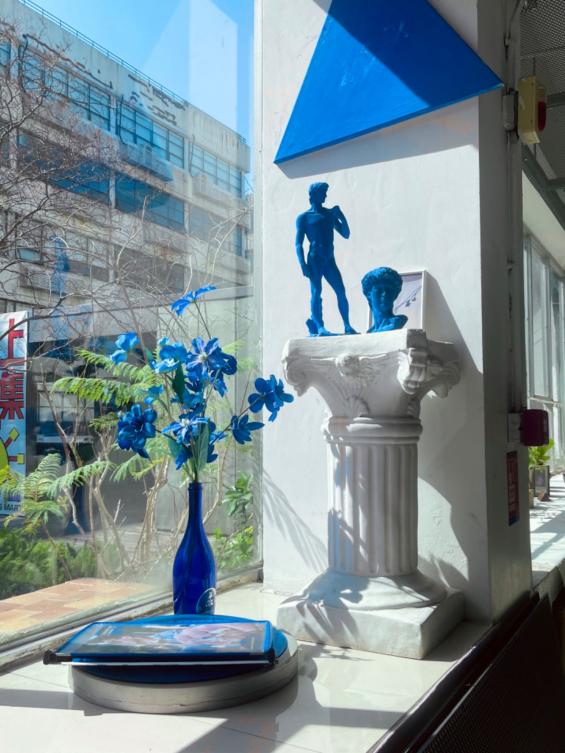
Shenzhen street view photographed by Polina
As for herself ten years from now, Polina smiles and says she doesn't like making overly specific plans. "Change is the only constant in life. I really like the Chinese philosophy of '顺其自然 (shùn qí zì rán)' – letting things take their natural course. Sometimes, you don't need to try and control everything; just let things happen organically." She only hopes that in ten years, she can have a healthy work-life balance. "For me, the greatest happiness is exploring new, creative experiences and finding motivation to get up every day. Doing a job I love, having time for hobbies, expressing myself through art. Being surrounded by people who challenge me in a healthy way and give me the courage to try things that seem impossible – that would be a successful life."
From the Far East to Beijing, from Shenzhen Bay to the world stage, this 24-year-old girl is forging her own path between East and West – unhurried, gentle, yet determined. Like her favorite Chinese philosophy: letting things take their natural course, yet finding her own direction.
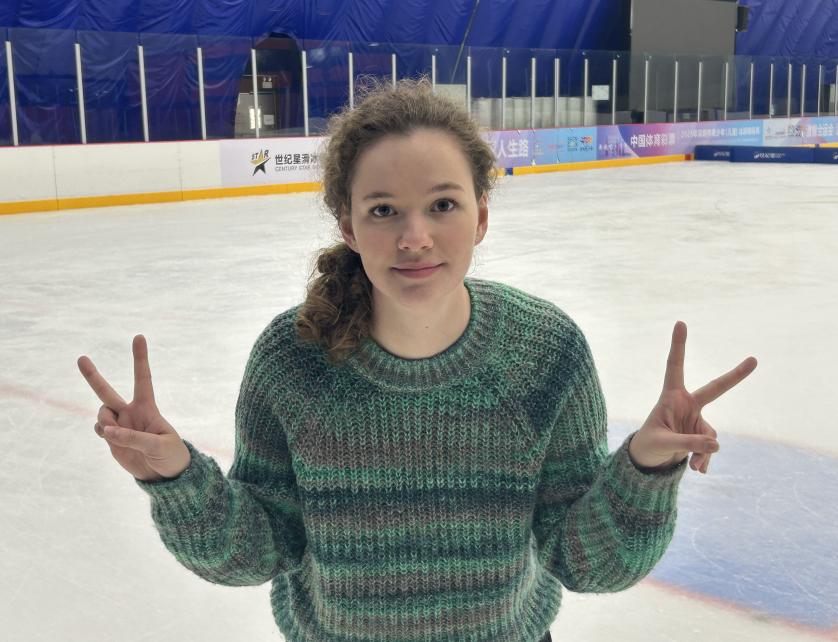
Polina in her leisure time