In June 2026, the ALSA International Mediation Competition 2026 (AIMC 2026), organized by the Asian Law Students’ Association (ALSA), with the WIPO Arbitration and Mediation Center as its official partner, and hosted by Peking University Student Intellectual Property Association (PKU-IPA), was successfully held at STL.
When a cross-border intellectual property dispute took center stage at AIMC 2026, participating teams presented a diverse range of negotiation strategies. Some began with the legal fundamentals, seeking first to clarify the boundaries of each party’s rights. Others took a pragmatic approach, prioritizing the commercial interests of both parties. Still others sought to break the deadlock through communication, working to get stalled negotiations back on track.
As the head of the competition’s logistics and technical team, Anna was involved throughout the organization of the intellectual property workshop. Watching the simulated dispute unfold gave her a vivid sense of one of the central questions in cross-border legal practice: when different legal systems, commercial interests, and cultural perspectives meet, how can legal professionals help the parties understand one another and find a path toward mutually acceptable solutions?
It was a question Anna had been pursuing ever since she chose to study international law.
Originally from Russia, Anna studied international economic law as an undergraduate. After joining STL in Shenzhen, she gradually focused her academic interests on cross-border intellectual property. In Shenzhen, ideas that once seemed abstract on the pages of textbooks became part of everyday reality: How does a technological innovation make its way from the laboratory to the market? How do companies expand overseas? How should innovation be protected? And how can different economies build sustainable cooperation through rules and institutions?
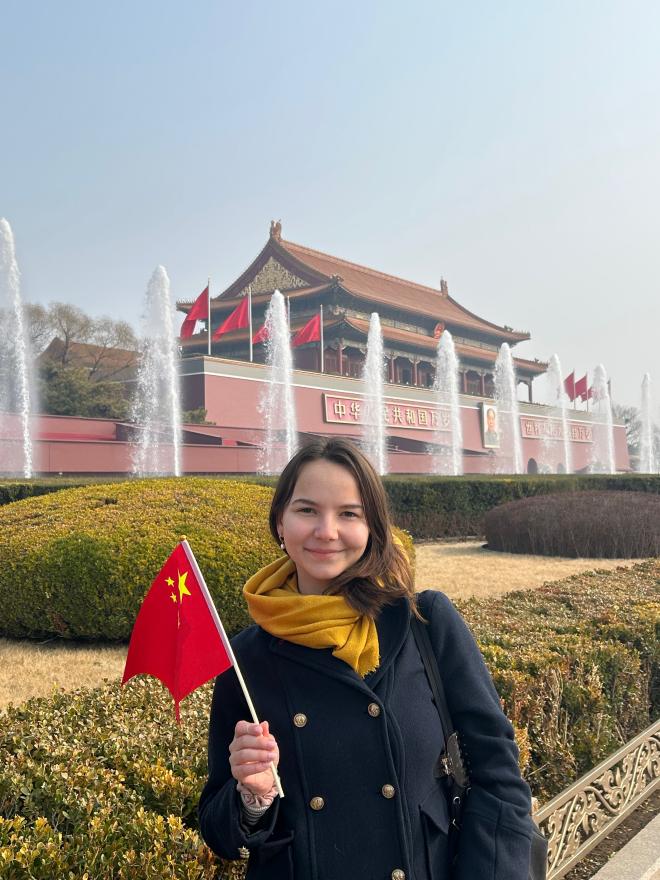
PART 01 | From Russia to Shenzhen: Choosing a City Open to the World
Cross-border trade, international commercial transactions, and the interaction of different legal systems were already familiar concepts to Anna before she began applying for master’s programs. But she did not want to understand the world only through textbooks. She wanted to study in an environment where “international” was not simply a word in a course title, but part of everyday academic life.
At the STL, different legal systems are not isolated chapters in a textbook. They are different ways of thinking that meet in the same classroom. Cultural differences are not merely described in case studies; they are embodied by classmates who may approach the same question from entirely different perspectives. Anna wanted to understand not only the answers they reached, but also the reasoning and experiences behind those answers.
At the same time, expanding economic and trade ties between China and Russia made a deeper understanding of China and the wider Asia-Pacific increasingly relevant to her future career. She wanted to move beyond theory and see for herself how law operates within actual markets, companies, and communities.
After careful consideration, Shenzhen became her next destination. She was drawn by the distinctive transnational legal education at STL, its international faculty, and its open academic environment. To Anna, the Guangdong-Hong Kong-Macao Greater Bay Area resembles a constantly evolving testing ground: companies are founded and grow here before expanding into global markets; capital and businesses from different places converge here; and nearly every step of a cross-border transaction is shaped in some way by legal rules.
“I wanted to understand China more deeply—not only its legal system, but also its business environment, its society, and the way people interact with one another.”
Once she arrived in Shenzhen, the city gave her far more to think about than she had expected.

Anna Serves as a Presenter at the Russian Booth during PHBS International Culture Day
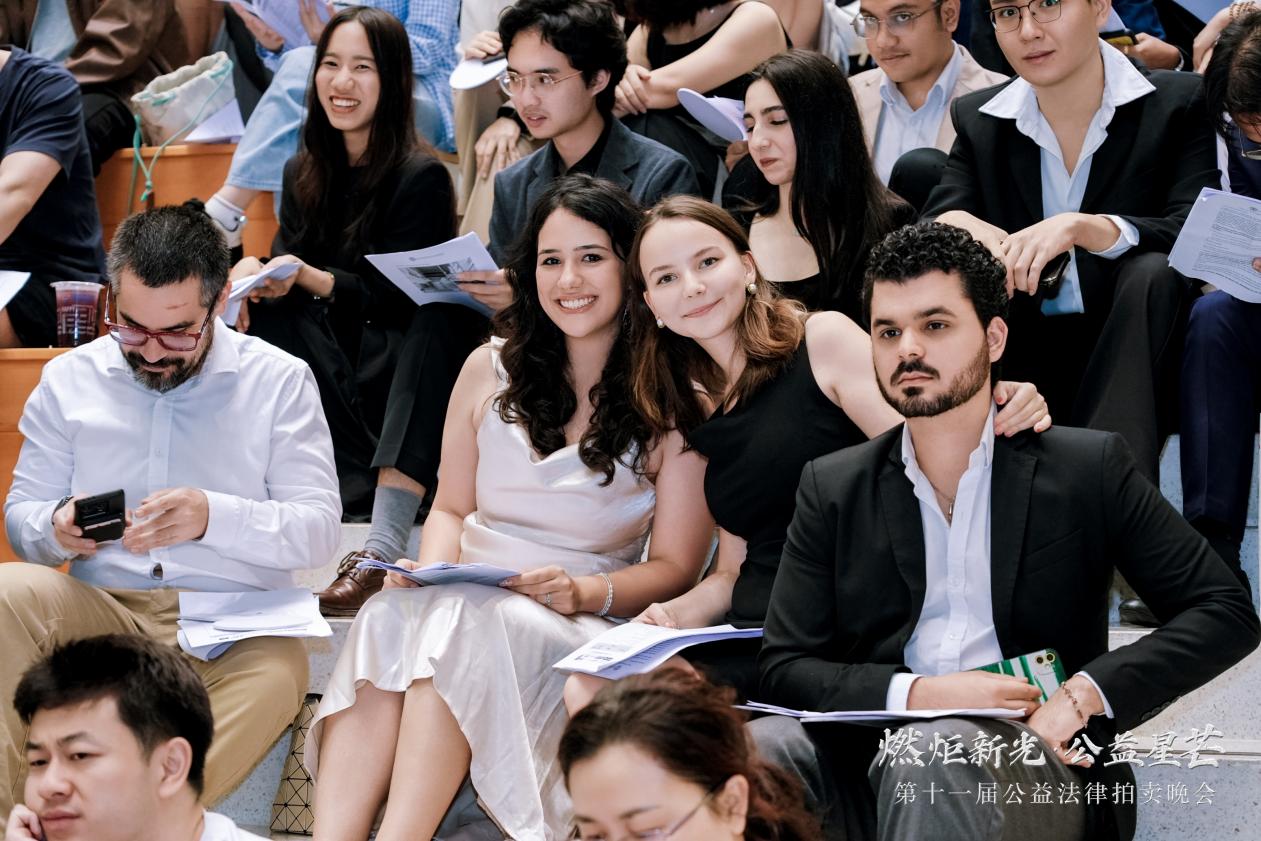
Anna Attends the “Stars of Torch Light” Public Interest Law Charity Auction Gala
PART 02 | Lessons from Mediation: Giving “Cross-Border” Cooperation a Human Dimension
When Anna first arrived in Shenzhen, “cross-border” was still a relatively abstract concept in her career plans. The AIMC International Mediation Competition changed that.
As head of the competition’s logistics and technical team, she helped organize a workshop on intellectual property law. What impressed her most was how differently each team approached the same dispute. Some began by defining the scope of intellectual property rights and responsibilities. Others prioritized the commercial interests of both parties and searched for a workable balance. Still others treated negotiation itself as the point of departure, trying to identify a settlement that everyone could accept.
The experience made Anna realize that real cross-border disputes are rarely like standardized exercises in a textbook. There is seldom a single legal provision that can produce an immediate answer. Whether negotiations can move forward depends not only on legal reasoning, but also on the parties’ actual concerns, the interests on which they may be willing to compromise, and the legal professional’s ability to translate complicated positions into terms that everyone can understand. For her, law is not only about defining boundaries. It is also about creating room for cooperation within those boundaries.
The experience sparked a deeper interest in mediation and negotiation. She later enrolled in courses taught by experienced mediators, developing her practical skills through simulations and negotiation exercises.
“For future legal professionals, negotiation skills are essential. In complex cross-border transactions, a lawyer’s job is not simply to explain the law. It is also to find a way forward when different interests come into conflict.”
A negotiation table, two very different positions, and the search for possible cooperation amid disagreement—this, for Anna, became one of the most tangible meanings of “cross-border.”
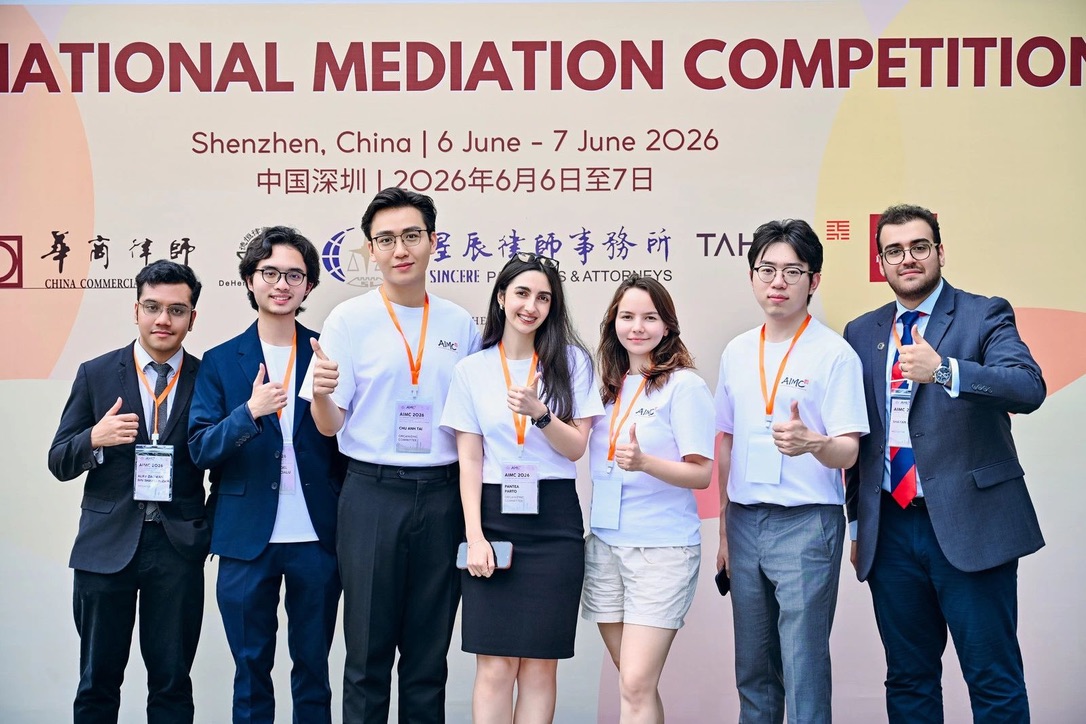
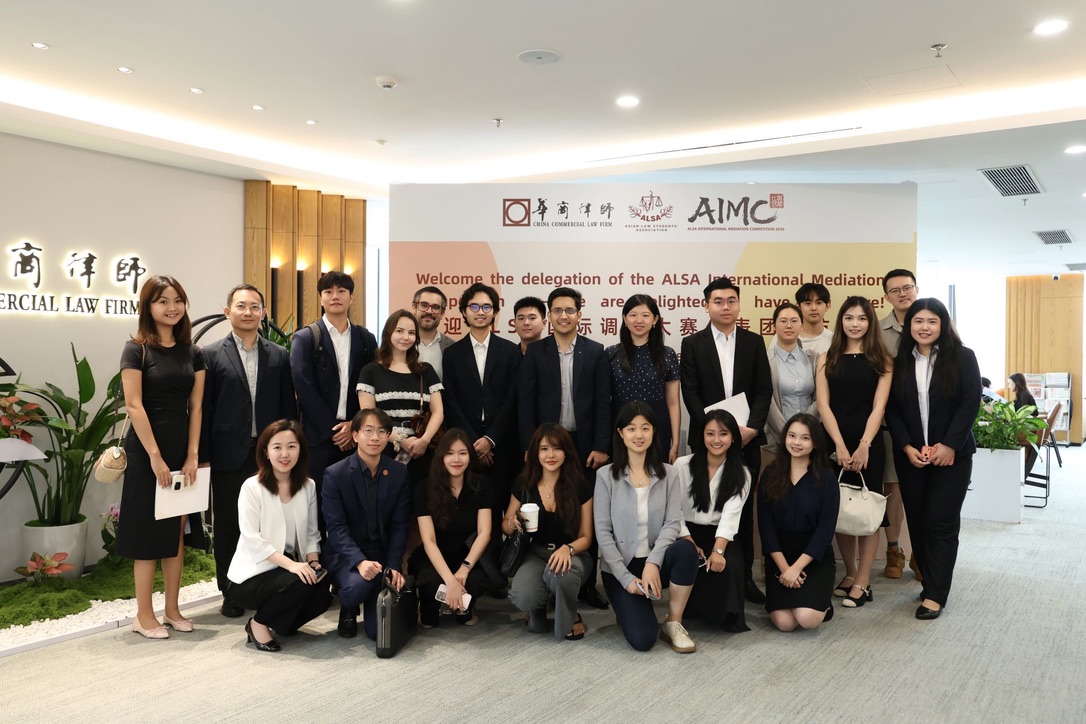
Anna Participates in the AIMC
PART 03 | Reading Shenzhen Through Law, Technology, and Innovation
If Anna had to describe Shenzhen in one word, she would choose “speed.”Technologies evolve rapidly. New products appear constantly. Emerging companies continue to grow across the city.
During her studies at PKU Shenzhen, Anna visited Chinese technology including OPPO and HONOR, as well as law firms specializing in technology, innovation, and overseas business expansion. These visits made one thing increasingly clear to her: technology, business, and law are never three separate tracks.
Completing the research and development of a new technology is only the beginning. To turn it into a real-world application, companies must identify suitable use cases. To commercialize it, they must clarify ownership. To enter overseas markets, they must navigate licensing arrangements, transaction structures, intellectual property protection, and different legal systems.
A laboratory may ask, “Can this technology be built?”A company may ask, “Can this product be sold?”Law must answer a different set of questions: Who owns the innovation? How may it be used? How should it be protected? And what legal arrangements will allow it to enter other markets securely and sustainably?
These questions gradually changed the way Anna looked at Shenzhen. To a visitor, Shenzhen may first appear as a city of skyscrapers, fast-growing technology companies, and constantly evolving electronic products. But as a law student, Anna began to notice another layer beneath that visible dynamism.
Rules may operate quietly, but they determine how an innovation is owned, licensed, transferred, and commercialized. They can also determine whether an innovation is able to cross national borders at all. She became increasingly certain of the question she wanted to pursue professionally: when a technology leaves the place where it was created and enters another market, how can law make that journey more stable, predictable, and secure?
Intellectual property thus became an increasingly clear academic and professional focus for her.
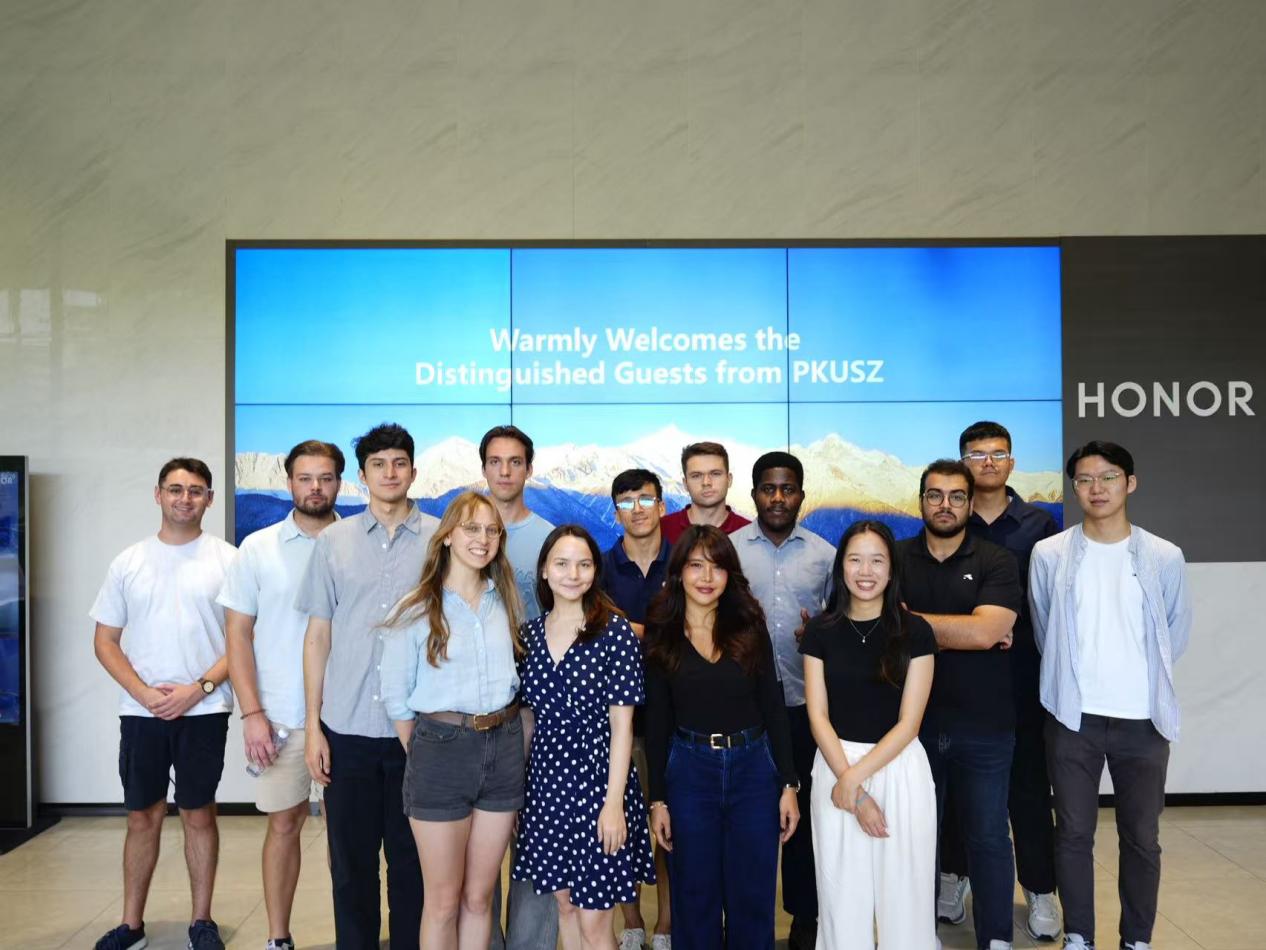
Anna Visits HONOR with Fellow Students from STL
PART 04 | A Lesson from the Classroom: Consensus Does Not Mean Erasing Differences
Anna’s understanding of cooperation was also shaped by a classroom project on the coffee industry.
In the course Management for Lawyers at PKU Shenzhen, Anna worked with Chinese and Vietnamese classmates under the guidance of an American professor to study China’s coffee market. The team compared Luckin Coffee and Starbucks, examining why two brands operating in the same market made very different business choices and how multinational companies adapt their business models, products, and brand narratives to local conditions.
But for Anna, the most memorable part was not the final conclusion. It was the process of working together. Team members came from different countries and had different educational backgrounds, habits of thought, and ways of approaching problems. Some immediately focused on marketing strategies. Others turned first to market data. Some were more interested in underlying business logic, while others paid closer attention to consumer experience. Some preferred to state conclusions quickly; others wanted to lay out the full chain of reasoning before reaching a judgment.
Yet these differences did not prevent the team from moving forward. Instead, once everyone began explaining the “why” behind their thinking, ideas that had initially seemed contradictory started to find their proper place. The group ultimately reached agreement on its core conclusions while still preserving the distinctive perspectives and ways of thinking of individual members.
That experience left Anna with a lasting impression: real cooperation does not require everyone to think in exactly the same way. Mature collaboration means acknowledging differences and still finding a way to produce something meaningful together.
The classroom project became, in her mind, a small but vivid reflection of cooperation across the Asia-Pacific. Different countries, markets, and legal systems will never naturally arrive at the same answer. What matters is not asking one side to abandon its differences, but whether each side can clearly explain its own logic while remaining willing to listen seriously the other.
“Consensus does not mean eliminating disagreement. It means that even when differences remain, we are still willing to work toward the same goal.”
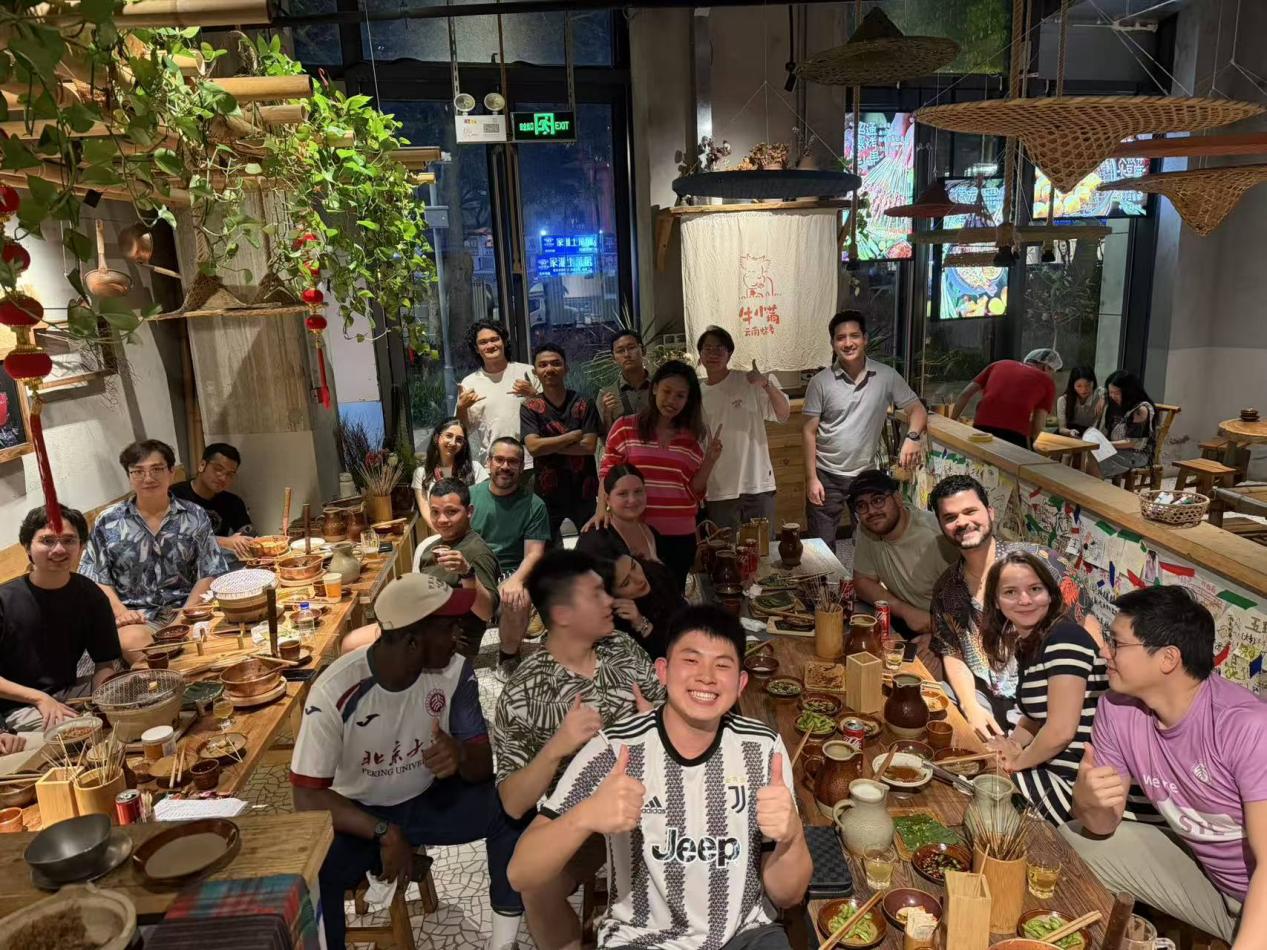
Anna Gets Together with Friends at PKU Shenzhen
PART 05 | Looking Toward the Asia-Pacific: Bringing a Personal Ambition into Cross-Border Cooperation
Now in her second year of graduate study, Anna looks back on her time at PKU Shenzhen as a period that helped clarify her future direction. Through academic study and repeated practical experiences, she has become increasingly determined to pursue work in intellectual property and cross-border law.
In her view, as technologies move across borders more frequently, there is growing demand for legal professionals with interdisciplinary expertise. They need to understand intellectual property systems as well as international transaction rules. They must be able to interpret complex contracts and legal frameworks, while also understanding how technologies are commercialized and what companies actually encounter when entering overseas markets.
Developments in China and Russia have given this professional ambition a particularly practical dimension. Anna has observed China’s extensive experience in technological innovation and industrial commercialization. At the same time, Russia is placing growing emphasis on domestic manufacturing and technological research and development. If technological cooperation between the two countries continues to expand, what moves across borders will not simply be products, equipment, code, or patent documents. Rights, responsibilities, risks, and trust will move with them.
Anna hopes that her future work will allow her to participate directly in such projects—perhaps by helping Chinese technology companies enter the Russian market, working on cross-border technology licensing, supporting joint R&D projects between Chinese and Russian companies, or participating in international commercial transactions across the wider Asia-Pacific.
She is in no hurry to define herself by a single job title. Rather than asking, “What kind of professional do I want to become?” she is increasingly clear about what she hopes to accomplish: when different markets, companies, and legal systems meet, she wants to help clarify complicated issues, define uncertain rights and responsibilities, and make cooperation that looks possible on paper workable in practice.
This professional ambition has also given her a more concrete understanding of APEC. The Asia-Pacific is not a homogeneous region. Its economies differ greatly in legal systems, industrial structures, business cultures, and stages of development. Yet goods, technologies, capital, and people continue to move across borders. That is precisely why regional cooperation matters. Because differences exist, rules must be interpreted. Interests must be balanced. Trust must be built gradually.

At the AIMC competition, Anna saw how negotiation could create room for cooperation between different positions. In a multicultural classroom, she saw how contrasting perspectives could coexist. Through visits to Shenzhen’s technology companies and law firms, she came to understand that innovation cannot move confidently across borders without clearly defined rights and reliable legal protection.
Together, these experiences have reinforced one conviction: cooperation does not happen because we are the same. It becomes possible because, even when differences remain, we are still willing to search for a way forward together.
That is also the Asia-Pacific future Anna hopes to see—one in which regional cooperation is measured not only by trade figures and economic growth, but also by mutual understanding, respect, and durable partnerships.
Sometimes, contribution starts with something much smaller: choosing to understand an unfamiliar system before judging it, asking “why” when encountering a different point of view, and, after developing solid professional expertise, being willing to step into real situations where cooperation must actually be negotiated and built.
For Anna, this is what APEC ultimately represents: people from different places learning to understand one another—and, after doing so, still choosing to move forward together.