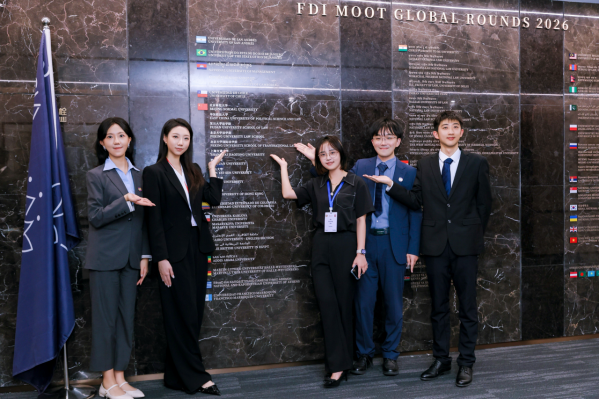
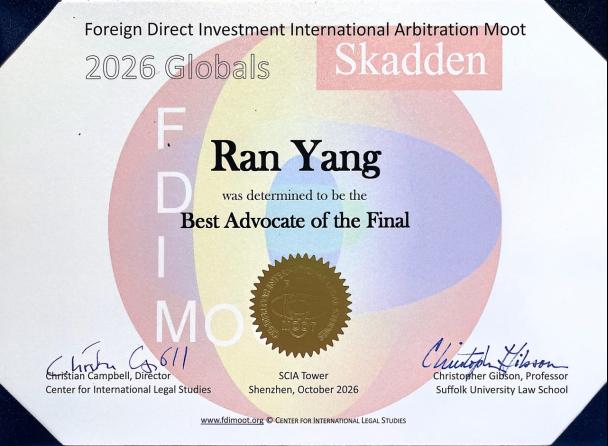
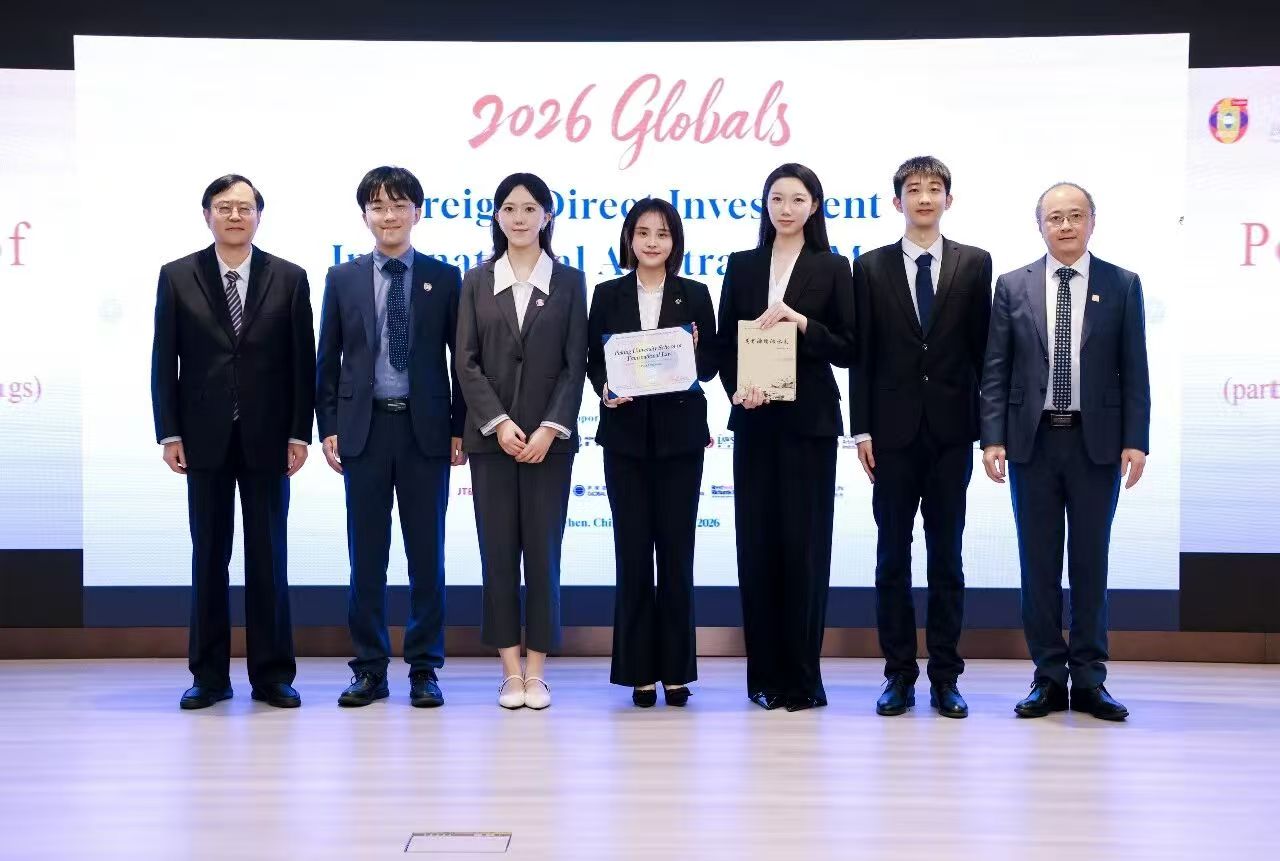
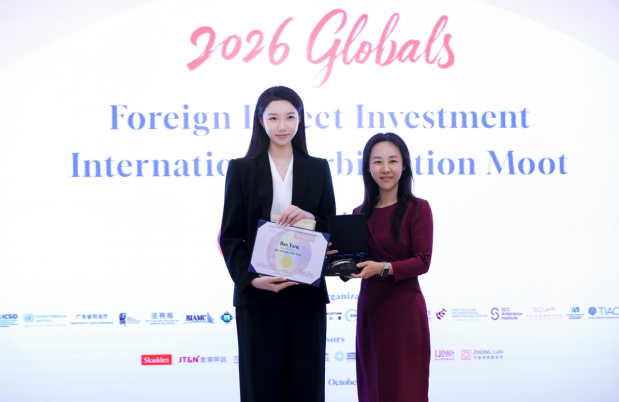
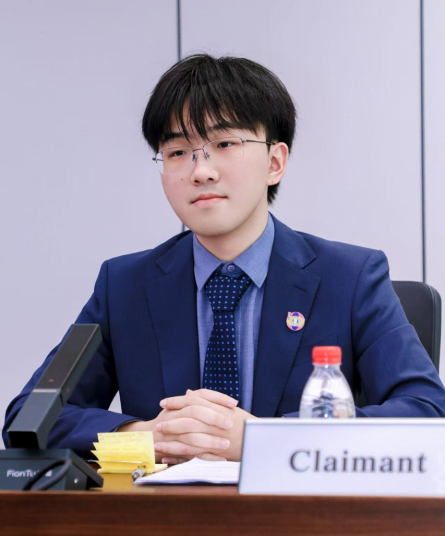
The Peking University School of Transnational Law (PKU STL) team finished as runner-up at the 2026 Foreign Direct Investment International Arbitration Moot (FDI Moot) Global Rounds, held in Shenzhen from October 23 to 27. The result marks the best performance by a Chinese university at the FDI Moot Global Rounds to date. Ran Yang, a member of the Class of 2024, was named Best Advocate of the Final.
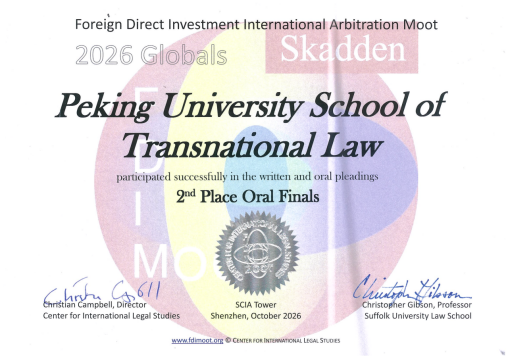
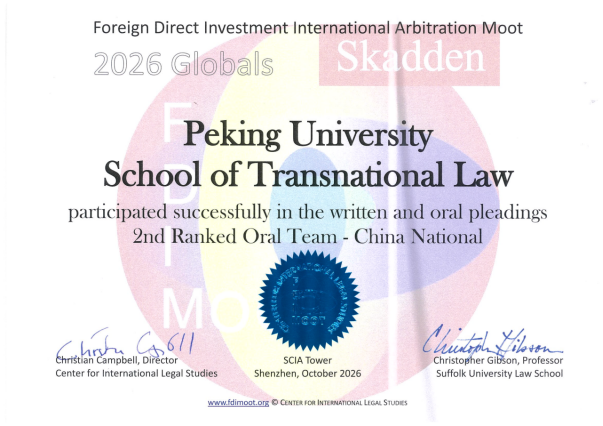
This year's competition brought together 72 teams and nearly 400 participants from 33 countries and regions, alongside arbitration practitioners and adjudicators from 37 countries and regions. After several rounds of competition, the Law Society of Ireland took first place, followed by PKU STL in second and Singapore Management University School of Law in third.
Seven Rounds to the Global Final
The FDI Moot is an international student competition focused on international investment arbitration. It provides students with practical training in investment law and arbitration while fostering academic exchange and professional engagement across jurisdictions. The 2026 Global Rounds marked the competition's first edition held in China.
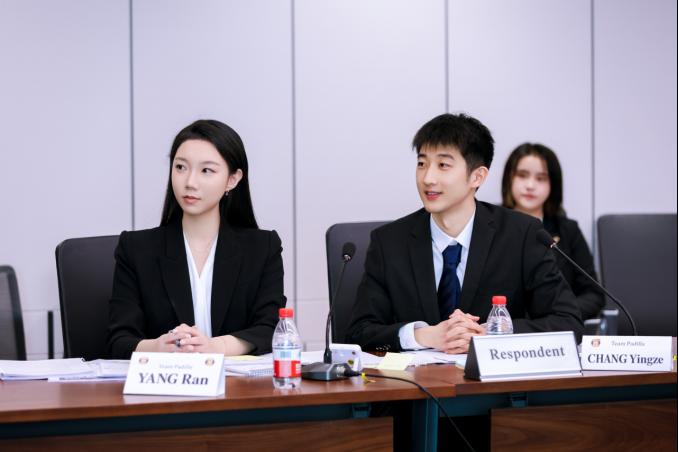
Teams work on a simulated international investment arbitration case, conducting legal research and case analysis, preparing written submissions, and presenting oral arguments before arbitral tribunals. The competition tests participants' understanding of international investment law and arbitration rules, as well as their legal reasoning, advocacy, communication, and ability to respond to questions under pressure.
The PKU STL team advanced to the global final after seven rounds of competition. The team was coached by QIU Xiaoya, Director of Graduate and International Programs, and XU Ruixiang, Senior C.V. Starr Lecturer of Law.
All four members of the competing team are students from the entering class of 2024: CHANG Yingze, MA Changlu, YANG Ran, and YAN Tingyue. Students from the entering class of 2023 — YAO Ruiyang, YANG Yahan, SHAO Ziheng, and LI Haobin — served as student coaches, supporting the team's preparation.
Yang's performance in the final earned her the distinction of Best Advocate of the Final, adding an individual honor to the team's historic achievement.
Mooting as a Foundation for International Legal Training
Moot court competitions provide an important bridge between legal theory and practice. Through legal research, written advocacy, oral argument, and responses to questions from a tribunal, students deepen their understanding of substantive law while developing analytical rigor, persuasive communication, and cross-cultural competence.
PKU STL has long emphasized the role of moot court competitions in preparing students for international legal practice and has continued to support participation in high-level international competitions.
In preparing for this year's Global Rounds, the team received academic guidance and support from faculty members including Mark Feldman, Interim Dean of PKU STL; Kevin Gray, Assistant Professor; Christian Pangilinan, Director of Moot Court Competitions; and Dini Sejko, Visiting Professor. Alumni GU Dai, LIU Dingmin, LI Anhua, LI Mengchao, and SHU Xi also shared their experience and offered advice to the team.

The result reflects the students' legal knowledge, advocacy skills, and dedication, as well as the collective support that helps them prepare for demanding international competitions.
Bringing International Arbitration to Shenzhen
The 2026 FDI Moot Global Rounds brought students, scholars, and arbitration professionals from around the world to Shenzhen, creating opportunities for professional exchange and international engagement in investment arbitration.
The Shenzhen Court of International Arbitration (SCIA) has supported the development of the FDI Moot Shenzhen competition in China since 2020. Hosting the Global Rounds in Shenzhen further expanded opportunities for dialogue and cooperation among the international investment arbitration community.
PKU STL will continue to integrate academic learning with practical training and encourage students to participate in leading international academic and professional activities. Through these opportunities, the School seeks to prepare graduates with strong legal foundations, an international outlook, and the ability to work effectively across legal systems and cultures.